How to Choose Comfortable Kids Dancewear for Every Class
The best outfit depends on the class, the pace, and the studio’s dress code. A ballet lesson calls for a different silhouette than a hip-hop rehearsal. For busy caregivers, comfortable kids dancewear should support the activity, fit the family budget, and help the child focus on learning new steps.
Ballet essentials for movement and presentation
A leotard with tights gives ballet dancers a clean outline and keeps clothing from catching during movement. Younger children may prefer a skirt, while older students often need a fitted style that lets the teacher see alignment. For first ballet classes, families should look for soft fabric, secure coverage, and slippers that fit without folding beneath the foot. Beginner-friendly brands such as Stelle focus on affordable, colorful basics for this stage, with leotards that are easy for new dancers to move in.
The outfit should allow full leg extension and easy arm movement. Scratchy waistbands, loose sleeves, and bulky layers can make basic exercises feel harder. A simple design also helps a dancer feel prepared when class includes posture work or center practice.
Jazz and tapwear for flexibility and footwork
Jazz classes usually call for clothing that moves easily through turns, kicks, and floor work. A fitted top with leggings, shorts, or a unitard can work well when the studio permits it. The material should stretch in several directions and recover after repeated movement.
Tap dancers need an outfit that stays clear of the feet. Loose hems can brush the shoes or distract during quick footwork. Dance shoes should follow the teacher’s requirements, since tap construction and fit vary by age and level.
Hip-hop and contemporary options for freedom of movement
Hip-hop often suits relaxed clothing, but relaxed should not mean dangerously loose. Joggers, fitted layers, and stretch tops can provide room for jumps, slides, and grounded movement. The child should be able to bend and reach without constantly pulling fabric back into place.
Contemporary dance may combine athletic motion with floor work. Soft leggings, fitted shorts, and breathable tops help reduce bunching when dancers roll or stretch. Bare feet, socks, or specialty footwear should be chosen according to the class rules and studio floor.
Performance outfits versus everyday practicewear
Costumes are designed for a particular routine, stage, and visual effect. Practicewear has a more practical job: it must survive repeated washing and remain comfortable through warm-ups and corrections. Keeping these categories separate can preserve special outfits and reduce unnecessary wear.
A performance piece may include sequins, mesh, or firm shaping that would feel irritating during a long class. For rehearsals, a child generally needs simpler clothing that can handle sweat and frequent movement. The teacher’s costume instructions should take priority when a show is approaching.
Get the right fit for comfort and mobility
Fit affects confidence as much as comfort. Clothing that slips makes a child tug and adjust instead of concentrating, while clothing that pinches can limit movement. A careful fitting process helps families choose dancewear that feels secure, true to the child’s current size, and comfortable enough for repeated practice.
Measure children before buying
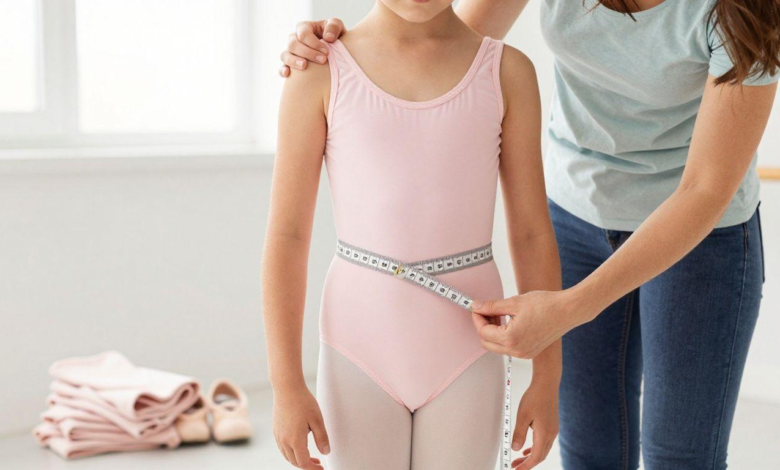
Children’s sizing is not perfectly consistent between brands or styles. A caregiver can measure height, chest, waist, hips, and girth, then compare those numbers with the garment’s size chart. Measurements taken over a thin layer are usually more useful than guessing from a child’s everyday clothing size.
The child should stand naturally during measuring. Pulling the tape tight can produce a smaller number than the garment actually needs. If measurements fall between sizes, the family should consider the garment’s stretch, construction, and return policy.
Choose a secure fit without restrictive tightness
A well-fitting leotard lies smoothly against the body but does not leave deep marks. The child should be able to squat, reach overhead, lift each leg, and breathe comfortably. Freedom to move matters most when the outfit is being tested.
A quick movement check can reveal problems that a mirror does not. If straps slide, fabric rides up, or the child cannot pinch a little ease at a seam, the style may not be right. Tightness should never be confused with support.
Check waistbands, straps, seams, and closures
Small construction details can determine whether an outfit stays comfortable for an entire lesson. Waistbands should sit flat, straps should remain in place, and seams should not press into areas that rub during floor exercises. Closures need to stay shut without digging into the skin.
Children should try sitting, stretching, and walking in the garment before its first class. A smooth inside finish is especially helpful for dancers who are sensitive to texture. Any rough tag or stiff seam can often become more noticeable after an hour of movement.
Allow room for growth without creating safety issues
Buying a little growing room can make financial sense, but oversized dancewear can interfere with movement. Extra fabric may twist, drag, or cover the feet. The right amount of ease depends on the garment, the child’s growth pattern, and the studio’s expectations.
Families can check fit every few weeks during rapid growth. A leotard that pulls at the shoulders or tights that stop comfortably reaching the waist may already be too small. Replacing one worn piece early is safer than trying to stretch it through another season.
Choose breathable, flexible fabrics
Fabric influences temperature, softness, stretch, opacity, and laundry demands. A child who overheats or feels damp may lose focus before the class ends. Families should consider the studio temperature, class length, washing routine, and the child’s own sensitivity when comparing materials.
Compare cotton, polyester, nylon, and stretch blends
Cotton can feel soft and familiar, while polyester and nylon often dry more quickly and hold their shape. Stretch blends add flexibility for bending, kicking, and floor work. No single fiber is best for every dancer, so the garment’s knit, finish, and fit matter too.
The following comparison gives families a starting point rather than a strict ranking. The final choice should reflect the child’s comfort and the care instructions on the label.
| Fabric or blend | Common advantage | Watch for |
| Cotton | Soft, familiar feel | Can stay damp after heavy sweating |
| Polyester | Quick drying and shape retention | May feel warm to some children |
| Nylon | Smooth feel and durability | Can require attention to heat during drying |
| Stretch blend | Flexible movement and close fit | Stretch quality varies by garment |
A blend may balance softness, drying speed, and resilience better than a single fiber. The child’s reaction after a full class is more informative than the fiber name alone. Families should notice whether the fabric still feels comfortable after washing.
Look for moisture-wicking and quick-drying materials
Moisture-wicking fabric can move perspiration away from the skin, while quick-drying fabric helps the garment feel less damp between classes. These qualities can be useful for older children, long rehearsals, and warm studios. They do not replace a clean outfit after heavy sweating.
A spare top or pair of tights can help when a child has back-to-back activities. Damp clothing should be removed from a dance bag promptly. Airing out the bag itself also reduces the stale smell that develops when wet fabric stays enclosed.
Avoid fabrics that cause itching, overheating, or chafing
A beautiful outfit is not a comfortable outfit if its fabric irritates the child. Itching may come from rough fibers, tags, elastic, or decorative details. Heat and friction can become especially distracting around the neckline, underarms, waistband, and inner thighs.
A short trial at home can reveal likely trouble spots. The child can walk, stretch, and sit in the garment before the tags are removed. If irritation appears quickly, another fabric or construction is usually a better choice.
Consider stretch recovery and durability
Stretch recovery describes how well a fabric returns to its original shape after movement. Strong recovery helps a leotard remain smooth instead of becoming loose at the seat or neckline. Durability matters when the same pieces are worn, washed, and packed several times each week.
Families can inspect elastics and seams after laundering. A garment that twists, pills heavily, or loses its shape may no longer provide a reliable fit. Paying attention early can prevent a small comfort issue from becoming a class-long distraction.
Select supportive dancewear for different ages
Age changes what children can manage on their own and what support they need from adults. Toddlers may need simple, soft designs, while older dancers may care more about coverage and personal style. A family-focused dancewear choice meets the child’s current abilities without making dressing, washing, or movement unnecessarily difficult.
Features for toddlers and beginner dancers
Beginners benefit from soft fabrics, uncomplicated layers, and secure closures. A parent or teacher should be able to identify the front and back quickly, especially during a busy class change. Clothing should stay in place while the child learns basic positions and follows directions.
Bright colors can make a young dancer feel excited, but comfort comes first; a brand like Stelle keeps its prices approachable, so families can find fun options without overspending. Scratchy decorations and complicated ties may create frustration. Simple outfits also make it easier for the teacher to observe developing posture and movement.
Practical designs for school-age children
School-age dancers often move from one activity to another on the same day. Pieces that pack easily, dry reasonably fast, and coordinate with existing shoes can simplify the routine. Leggings, fitted tops, and warm-up layers may work across several classes when dress codes allow.
The child can take part in choosing colors or styles. That small decision may encourage better care and a greater willingness to get dressed independently. Adults still need to check fit, coverage, and suitability for the class.
Age-appropriate coverage and confidence for older kids
Older children may want dancewear that feels more private during stretches, jumps, and floor combinations. Coverage should suit the dancer’s comfort as well as the studio’s rules. Supportive construction can help a child feel steady without creating pressure or limiting breathability.
A respectful fitting conversation matters at this age. The dancer should be invited to describe pinching, slipping, overheating, or unwanted exposure. Confidence often grows when clothing supports both movement and personal comfort.
Easy-on styles that encourage independence
Pull-on garments, clear fasteners, and manageable straps help children dress with less assistance. Independence is easier when the outfit is not overly tight or complicated. A child can practice fastening shoes and arranging layers at home before the first class.
Caregivers can label bags and keep accessories together in a small pouch. The goal is not perfect speed. It is a predictable routine that lets the dancer handle more of the preparation safely.
Build comfortable outfits with layers and accessories
An outfit rarely ends with a leotard or top. Warm-ups, tights, shoes, hair ties, and undergarments all affect how a dancer feels. Each piece should stay quiet during movement and serve a clear purpose.
Use warm-up clothing before and after class
Warm-up layers help children stay comfortable while traveling to the studio and waiting for class to begin. A wrap, sweater, leg warmers, or soft pants can be removed once the dancer is ready. Layers should not be so bulky that they change how the child moves during instruction.
A named, washable layer is easier to recover from a crowded changing area. Children should also have a place to put removed clothing. A tidy bag keeps warm-ups from becoming tangled with shoes and damp practicewear.
Choose tights, socks, and undergarments that stay in place
Tights should lie smoothly at the waist and ankles without sagging or cutting in. Socks need a comfortable fit that does not bunch inside a shoe. Undergarments should provide suitable coverage while remaining unobtrusive beneath the required outfit.
Families can test these pieces with the shoes and main garment together. A seam that feels harmless alone may rub once several layers are combined. Comfort is easier to judge through a few bends, steps, and stretches.
Select dance shoes that fit the class and foot
Shoes should match the class and fit the dancer’s foot securely. Toes need room to move without sliding forward, and the heel should not lift excessively. Children should try both shoes with the socks or tights they will normally wear.
Shoes that are too large can make footwork unstable. Shoes that are too small may create pressure during jumps or repeated articulation. The teacher can clarify the required style, while the child’s movement and comfort guide the final fit.
Keep hair accessories and jewelry safe for movement
Hair should be secured away from the face without creating a painful tight spot. Soft elastics, pins placed carefully, and simple headbands are usually easier to manage than hard or dangling decorations. Jewelry can snag, scratch, or become a hazard during partner work.
A small pre-class check can catch loose clips and sharp edges. Children can learn to remove watches, necklaces, and large earrings before entering the studio. The simpler the accessory, the less likely it is to interrupt movement.
Balance quality, cost, and changing needs
Children outgrow dancewear quickly, and their class schedules can change from one term to the next. Families do not need the most expensive option for every item. They need an accessible mix of fit, durability, comfort, style, and expected use.
Decide when premium construction is worthwhile
Higher-quality construction can be worthwhile for a frequently worn leotard, tights used several times a week, or shoes that receive heavy use. Strong seams, reliable elastic, and fabric that keeps its shape may reduce replacement frequency. The value depends on how often the dancer will wear the item.
Premium pricing alone does not guarantee comfort. Families should inspect the stitching, fabric feel, closures, and return terms. A moderately priced garment with a good fit may serve better than an expensive piece that irritates the child.
Compare essentials, multipacks, and seasonal sales
A basic wardrobe often starts with the pieces required by the studio. Multipacks can help with tights, socks, or simple practice tops when the child wears them often. Seasonal sales may be useful, but only when the size and class needs are reasonably predictable.
Families can make a short buying list before shopping. Useful priorities include:
- One or two class-compliant main outfits
- Spare tights, socks, or undergarments
- A washable warm-up layer
- Shoes suited to the current class
This approach limits impulse purchases that sit unused in a drawer. It also leaves room in the budget for a replacement when growth or a new class changes the requirements.
Shop for versatile pieces across multiple classes
Versatile pieces can support more than one activity when the dress codes overlap. A plain stretch top, neutral leggings, or simple warm-up layer may work for jazz, contemporary, and rehearsal. Families should confirm that the teacher permits the same item in each class.
A small coordinated wardrobe makes laundry and packing easier. It also reduces the pressure to buy a completely new outfit whenever the schedule changes. Versatility should never come at the expense of class requirements or secure fit.
Know when secondhand or hand-me-down dancewear works
Secondhand garments can be practical for short-term growth stages, beginner classes, or rarely worn costume pieces. They should be checked for stretched elastic, thinning fabric, stains, missing closures, and strong odors. Shoes require extra care because worn soles or compressed support may affect stability.
Hand-me-downs work best when the size and condition are still appropriate. A low price is not useful if the child cannot move comfortably in the item. Cleanliness and fit deserve the same attention as they would in a new purchase.
Care for dancewear to preserve comfort and fit
Care affects how long fabric remains soft, elastic, and comfortable. Dancewear often gets washed more frequently than ordinary clothing, so gentle routines can help pieces hold up through repeated wearing. A simple care system protects both the garment and the family budget.
Follow washing and drying instructions
The care label should guide water temperature, detergent choice, and drying method. Many stretch garments last longer with gentle washing and reduced heat. Families can place small items in a mesh bag to limit tangling and snagging.
Dancewear should be sorted from rough items such as towels, zippers, and garments with hooks. Bright performance pieces may also need separate washing to reduce color transfer. Following the label is usually safer than assuming every synthetic fabric can handle the same cycle.
Prevent odors, shrinking, and loss of stretch
Wet clothing should come out of the dance bag soon after class. Letting it air before washing can help, but it should not replace regular cleaning. High heat, overloaded machines, and aggressive wringing can contribute to shrinking or weakened elastic.
A practical after-class routine can be short and consistent:
- Remove damp clothing from the bag.
- Hang or lay pieces flat according to the care label.
- Wash garments before odor settles into the fibers.
- Dry them with the lowest suitable heat or air-dry method.
These small habits keep fabric fresher between uses. They also make it easier to notice when a garment is no longer recovering its shape.
Inspect clothing and shoes for wear
A quick inspection can reveal loose stitching, thinning knees, stretched straps, or worn waistbands. Shoes should be checked for separated soles, damaged fasteners, and uneven wear. Problems are easier to address before they affect a full class or rehearsal.
Children can help with this check as part of packing their bags. They may notice discomfort before an adult sees visible damage. Any item that creates pain or instability deserves attention rather than another week of use.
Replace dancewear as children grow or routines change
Replacement is needed when an outfit pulls, slips, rubs, or no longer provides suitable coverage. Growth is not the only reason to replace it; a new class may require different shoes or a different level of support. The child’s movement and comfort should guide the decision.
A seasonal wardrobe review keeps purchases purposeful. Families can separate usable items for donation, resale, or younger siblings. The result is a smaller collection of dancewear that fits the dancer’s body and current activities.
Conclusion
Choosing comfortable dancewear comes down to matching the class, checking the fit, selecting suitable fabric, and caring for each piece well. When families choose soft, durable, sensibly priced pieces that children feel good wearing, young dancers have more attention available for technique, musicality, and the simple pleasure of dancing.