How Can Bathroom Safety Aids Make Home Care Safer for Seniors?
Bathrooms can be one of the most dangerous places in the home for seniors and for family members who are recovering from surgery or injury. The combination of wet floors, hard surfaces, limited space, and the need to frequently shift between sitting and standing increases the likelihood of slips and falls. For many families, bathroom safety aids are an important component to an overall plan to support independence and minimize daily risks. A safer bathroom is not just about equipment. It is about comfort, dignity, and making everyday activities easier to manage.
Why Bathroom Safety Matters for Seniors and Recovery Patients
The need for enhanced bathroom safety is triggered when balance, strength, vision, or mobility is diminished. Seniors may move more slowly, feel less steady, and need more time getting in and out of the shower. Recovery patients may have a similar experience with temporary bathroom safety concerns after surgery, joint replacement, fractures, and illness.
The bathroom is the most dangerous place in the home. A fall from standing in the shower can result in a broken bone, head injury, or loss of confidence. Even a minor slip can create a fear of bathing. This chronic fear can affect hygiene, independence, and emotional well-being.
Safety for the elderly in the bathroom relies on proactive strategies rather than reactive ones. It is possible to take small measures that offer greater safety while considering an individual’s needs, behavior, and physical ability.
Risk of Accidents Due to Common Bathroom Hazards
The bathroom is a compact space that puts people at multiple risk of falling. A combination of water, soap, steam, and smooth surfaces create a slippery environment. Inadequate lighting makes it hard to see the bathroom floor and adds to the risk.
Here are some common bathroom hazards that people encounter:
- Rugs or mats that slide when stepped on
- Low toilet seats
- Bathtubs with a high step-over
- Lack of hand support for the toilet or the shower
- Poor support for standing or walking in the bathroom
- Poorly located bathroom supplies that require bending or stretching
Identifying these hazards is the first step to preventing falls in the bathroom. Someone may be able to move freely in other rooms. The bathroom presents greater movement challenges, including bathing, which relies on the ability to balance and control movements.
Benefits of a Shower Chair
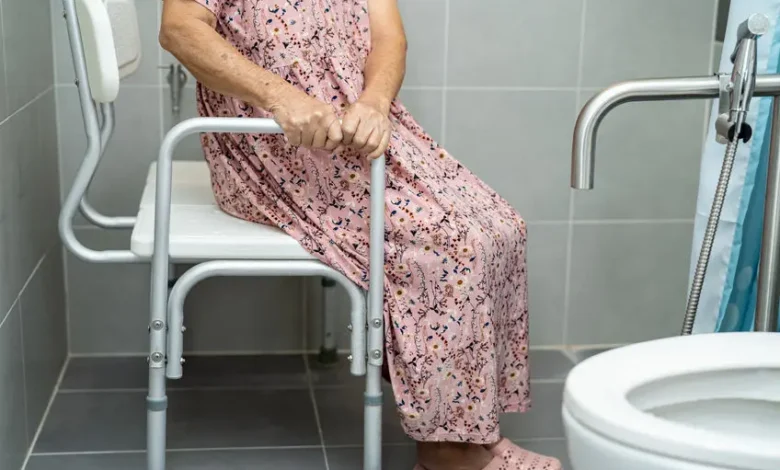
Having a shower chair can decreases the fatigue for people with limited strength, poor balance, or poor stamina. It also reduces the risk of standing on a slippery surface while showering. This can be especially helpful during the recovery process after an injury or surgery.
Shower safety can be enhanced if surfaces are stable, the floor is non-slip, and supplies are easily accessible. A shower chair should comfortably fit the shower space and allow the individual to sit and stand without requiring them to stretch or turn.
A shower chair without a backrest and armrests may be appropriate for more individuals. Some may need a transfer bench that permits them to sit outside the tub and slide over. The choice of which to use should be made depending on strength, balance, the layout of the bathroom, and the presence of a caregiver.
Safety Aids for the Bathroom in Support of Independence
The best safety aids are often simple and practical. Many families have bathroom safety aids that offer support during bathing, toileting, standing, and walking across the often wet and slippery floor. These aids can support a person’s mobility and provide safety without making the bathroom a clinical and uncomfortable space.
Bathroom safety aids that may be beneficial include non-slip mats, handheld showering devices, bath steps, toileting frames, and long-handled washing aids. These aids can help reduce the risk of sudden shifts in position, reaching, or bending.
Safety aids in the bathroom should help support the mobility of the person, yet be tailored to the specific support needs of the individual. For example, an individual who easily fatigues may benefit from assisted sitting while showering. If an individual has a pain condition that affects their knee, they may benefit from a raised toilet seat. A person who has a weak grip may benefit from easy grip controls that turn on and off or a showering device that can be controlled while the individual is seated in the bathtub.
The primary objective of these aids is to help individuals maintain their independence while supporting daily living activities.
The Function of Grab Bars, Raised Toilet Seats, and Safety Rails
In terms of safer bathrooms, grab bars are essential. Having grab bars installed provides stable hand support near the shower, bath, and toilet. Unlike towel rails, a correctly installed grab bar can support the weight of the user.
A grab bar should be installed near shower entrances. Also, to support standing and balance, a grab bar can be installed vertically. Conversely, a grab bar can be installed horizontally to assist someone in the seated and standing position. Since bathroom walls can be built differently, sometimes, grab bars need to be installed by a professional.
Knee and hip strain are also reduced by using a raised toilet seat. It can also assist in the seated and standing motion for the elderly and also those who have had surgery on the hip, knee, or abdomen.
Added support is provided by toilet safety rails. Having both hands to grip something can assist in making the process of using the toilet safer and also more private. For those who want to know the more practical options, there are also educational materials on bathroom safety products that can help provide a clearer picture on the safety and support products that are used in daily care.
Ways to Make a Bathroom More Accessible
There are small changes that can make a more senior friendly accessible bathroom without having to do a complete renovation.
Improve nighttime lighting. Motion-sensor night lights can indicate the location of the bathroom without needing to see a light switch.
Waist or shoulder height cabinetry helps reduce stretching. Shower caddies, wall shelves, and pump dispensers can help with access to soap and shampoo. Easy-grip handles and faucet taps that are push/pull can help with access.
Long-term access in the bathroom can be improved with a walk-in shower with low-threshold entries, wider doors, and comfort-height toilets. These can be especially valuable to households that are preparing to age in place.
Everyday Habits That Help Reduce Fall Risks
Providing equipment helps but there are daily habits that help with fall prevention in the bathroom. A safer routine reduces the need to rush and builds confidence.
Sitting and standing at an appropriate pace can be encouraged. Standing too quickly can cause dizziness that can be aggravated from a warm shower. Checking your balance is important before walking.
Putting towels, clothing, and aids that help with mobility close to the bathing can help go less of a stretch and out of the bathroom while wet.
Another few home safety suggestions are:
- Cleaning wet floors immediately
- Non-slip shoes and grip socks
- Keeping the bathroom warmer to avoid rushing or shivering
- Sitting while using the handheld shower head
- Avoiding bath oils that create slippery surfaces
- Being open to help for tasks that are potentially risky
Additionally, caregivers should be on the lookout for certain behaviors. If a person begins to lean on walls for support, starts to avoid bathing, or is struggling to stand from the toilet, this is a sign that the bathroom requires additional safety features.
When Extra Help is Needed
Some families are more than capable of implementing safety features on their own. However, the fast pace of the decline in mobility, an increase in falls, or complex recovery is an extra help signal.
One of the best examples of this is an occupational therapist. They are able to look at the flow of a person’s movements in the bathroom and suggest features such as bath safety bars, which shower chairs are the best options for them, and if a raised toilet is appropriate.
Bathroom safety is strongest when it brings together an ideal balance of design, safety features, and the healthcare needs of a person. Whenever possible, the senior or recovering individual should be included in the safety decisions. They are more likely to accept and actually use the features.
Conclusion
Slipping is a common hazard that poor bathroom lighting and seating pose. Fortunately, there are products on the market that provide additional hand support, and design solutions adapted to different needs, that will make family members feel more comfortable during personal care without sacrificing independence. Thoughtful use of bathroom safety products, along with better habits and accessible design, supports comfort, dignity, and peace of mind. The most effective approach is practical and personal: focus on the real challenges someone faces each day and make steady changes that help them move with greater confidence.