How to Choose the Right Weighing System for Your Small or Mid-Size Poultry Farm
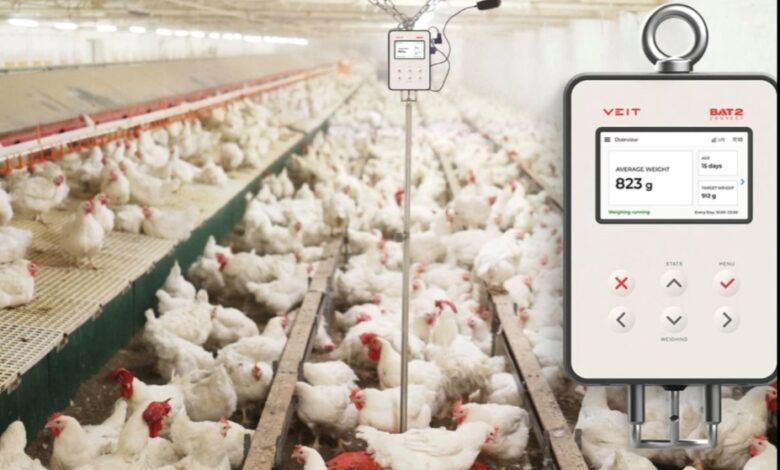
Not every farm needs industrial-scale equipment. If you’re running a small or mid-size operation, finding the right poultry weighing system means balancing accuracy, cost, and practicality. Here’s what to consider before you buy.
Why Weighing Matters – Even on Smaller Farms
Some farmers assume that precise weighing is only for large commercial operations. That’s a mistake.
Poultry scales deliver value at any scale:
- Better feed management – know exactly how much your birds need
- Optimal processing timing – hit target weights without guessing
- Early problem detection – weight drops signal health issues
- Performance tracking – compare cycles and improve over time
Whether you have 500 birds or 50,000, data-driven decisions beat intuition.
Key Factors in Poultry Weighing System Selection
Choosing the right system isn’t just about price. Poultry weighing system selection involves several considerations that affect long-term value.
1. Flock Size and House Layout
Larger flocks need systems that can handle high sampling rates. Smaller operations might do well with simpler setups.
Consider your house layout too. Where can you place a platform scale? Is there a natural traffic area where birds congregate?
2. Accuracy Requirements
How precise do you need to be? For basic monitoring, standard poultry weighing scales work fine. For detailed FCR calculations and uniformity analysis, you’ll want higher precision.
Look for systems with accuracy within 10–20 grams. Anything less precise and your data loses meaning.
3. Manual vs. Automatic
Manual scales cost less upfront but require labor and deliver smaller sample sizes. Digital poultry weighing scales with automatic data logging save time and provide continuous monitoring.
For small scale poultry weighing, a semi-automatic system often hits the sweet spot – affordable but still data-rich.
4. Data Management
What happens to your weight data? Some systems just display numbers. Others store data locally. The best poultry scale systems connect to software platforms where you can analyze trends, generate reports, and access information remotely.
If you manage multiple houses or want to track performance over time, integrated data management is worth the investment.
5. Durability and Maintenance
Poultry houses are tough environments – dust, humidity, ammonia, and constant bird traffic. Cheap scales fail quickly.
Look for:
- Stainless steel or corrosion-resistant materials
- Sealed electronics
- Easy-to-clean surfaces
- Minimal moving parts
A durable system costs more upfront but saves money on replacements and repairs.
Options for Small Scale Poultry Weighing
Let’s look at what’s available for smaller operations.
Handheld Digital Scales
The simplest option. You catch birds manually and place them on a scale. Affordable and portable, but labor-intensive and limited in sample size.
Best for: Very small flocks, spot-checks, or backup weighing.
Platform Scales with Manual Recording
A step up. Birds are placed on a platform scale, and you record weights by hand or into a spreadsheet. Better accuracy than handheld, but still requires catching birds.
Best for: Small farms that want better data without full automation.
Semi-Automatic Platform Systems
Birds step onto the platform voluntarily. The system records weights automatically. You review data on a display or download it periodically.
Best for: Small to mid-size farms that want automation without cloud connectivity costs.
Fully Automated Connected Systems
Automatic poultry scales with continuous monitoring, cloud data storage, and remote access. Birds weigh themselves throughout the day. You get real-time dashboards and alerts.
Best for: Mid-size farms serious about optimization, or any operation where labor is limited.
What to Look for in Digital Poultry Weighing Scales
When evaluating digital poultry weighing scales, ask these questions:
- What’s the weight capacity and precision? Make sure it matches your bird sizes.
- How is data stored and accessed? Local memory, USB export, or cloud?
- Is the platform size appropriate? Too small and birds won’t use it comfortably.
- What’s the power source? Battery, mains, or solar options?
- What support is available? Calibration, repairs, software updates?
Don’t just compare prices. Compare total cost of ownership including durability, data value, and time savings.
Tip: Request a demo or trial period before committing. Seeing how birds interact with a platform in your specific environment tells you more than any spec sheet.
Common Mistakes to Avoid
Buying the cheapest option – Low-cost scales often lack durability and accuracy. You’ll replace them sooner and get worse data in the meantime.
Ignoring data management – A scale that doesn’t store or export data limits your ability to analyze trends and improve.
Over-buying for your needs – Enterprise-level systems with features you won’t use waste money. Match the system to your actual operation.
Forgetting installation requirements – Some systems need specific mounting, power, or connectivity. Factor in installation complexity.
Making the Right Choice
Poultry scale systems are an investment in better management. The right choice depends on your flock size, budget, technical comfort, and goals.
For most small to mid-size farms, a semi-automatic or fully automatic platform system offers the best balance. You get reliable data without excessive cost or complexity.
Start by defining what you need:
- How many birds?
- How precise?
- How much automation?
- What data features?
Then compare options against those criteria – not just price tags.
Conclusion
Poultry weighing system selection doesn’t have to be complicated. Focus on accuracy, durability, and data management. Match the system to your operation’s size and goals.
Even for small scale poultry weighing, the right poultry scales pay for themselves through better feed efficiency, optimal timing, and faster problem detection.
Choose wisely, and your scale becomes one of the most valuable tools on the farm.
Photo source: https://poultryscales.com/