Is Home Battery Storage Worth It? The Honest Homeowner Math
Utility rates keep climbing, outages seem to arrive on schedule during the worst weather, and rooftop solar payback timelines look nothing like the glossy brochures from a decade ago. In this environment, homeowners keep asking a simple question that turns out to have a surprisingly complicated answer: does adding a battery to the house actually pay for itself, and if not in dollars, in the resilience it provides during an outage?
The answer depends on your utility rate structure, how often the lights go out, whether you already have solar, and what you consider a fair return on peace of mind. This piece walks through the real numbers behind a residential battery installation, the scenarios where the economics work and the ones where they do not, and the technical decisions that determine whether a system delivers on its promise. If you are trying to cut through sales-pitch optimism and figure out whether storage belongs on your house, this is the framework to work through.
What a Battery Actually Does for a House
Before running any economic model, it helps to be precise about the functions storage performs. A modern residential system does three distinct things, and the value of each depends on your specific situation. Choosing a home battery storage package makes sense when at least two of these three benefits carry real weight for your household, otherwise the upfront cost struggles to justify itself.
Backup Power During Grid Outages
The most tangible benefit is keeping essential circuits alive when the utility fails. Refrigerators, medical devices, well pumps, and internet routers stay powered while neighbors are dark. In areas prone to storm-related outages or wildfire-driven public safety shutoffs, this alone justifies the investment for many households. The technical detail that matters here is whether the system supports whole-home backup or only a critical loads panel, and whether it can run in island mode indefinitely with solar recharge.
Time-of-Use Arbitrage
Utilities in many regions now charge dramatically different rates depending on time of day. A battery lets you charge from the grid during cheap off-peak hours or from your own solar array during the day, then discharge during expensive evening peak periods. The savings per kilowatt-hour cycled can be significant, but the economics only work if your utility has a steep enough spread between on-peak and off-peak rates.
Solar Self-Consumption
Homes with rooftop solar increasingly face net metering rules that pay a fraction of retail rate for exports. Storing daytime overproduction and using it in the evening captures the full retail value of every kilowatt-hour produced, effectively raising the return on the solar investment itself. This is often the single largest economic driver for new installations in states that have rolled back favorable net metering.
Running the Numbers Without Fooling Yourself
Battery salespeople love to present payback calculations that assume best-case usage, no degradation, and current utility rates continuing unchanged for twenty years. A more honest analysis accounts for realistic cycling patterns, capacity fade, and the very real possibility that regulatory frameworks shift during the system’s life. The exercise is not to talk yourself out of the purchase, but to enter it with clear expectations.
Estimating Real Cycle Value
Start with the difference between your peak and off-peak rates, or between retail and export rates if you have solar. Multiply by the battery’s usable capacity to get the value of a full cycle. Realistic cycling is one full cycle per day for solar self-consumption homes, and roughly half a cycle per day for arbitrage-only installations. Annual savings rarely exceed a few hundred to low four figures for a typical residential pack, so payback horizons of eight to twelve years are common.
Accounting for Incentives and Rebates
Federal tax credits, state rebates, and utility incentive programs can reduce net cost by thirty to fifty percent depending on jurisdiction. These change frequently, so verify current programs before assuming a specific figure. Some utilities also offer bring-your-own-device programs that pay ongoing dispatch revenue in exchange for letting them discharge your battery during grid events, which can meaningfully shorten payback for homes in the right service territory.
Technical Choices That Determine System Value
Two batteries with identical nameplate capacity can deliver very different real-world value depending on how they integrate with the rest of the home. The technical decisions made during design and installation matter as much as the purchase price when evaluating whether the system will actually perform.
AC-Coupled Versus DC-Coupled Solar Integration
Existing solar arrays typically require an AC-coupled battery that installs alongside the current inverter. New installations can choose DC coupling, where the solar and battery share a hybrid inverter and avoid the double conversion losses that AC coupling incurs. DC coupling squeezes a few extra percent of round-trip efficiency out of the system, which compounds meaningfully over the life of the battery.
Continuous Versus Surge Power Ratings
Well pumps, air conditioners, and electric ranges draw brief startup surges that can be several times their steady-state load. A battery’s continuous output rating tells you what it can sustain, but the surge rating determines whether it can start these appliances at all during a backup event. Undersized inverters trip on startup and leave you without the very loads you bought the system to protect. Verify surge specifications against actual appliance nameplates.
Living With a Battery Day to Day
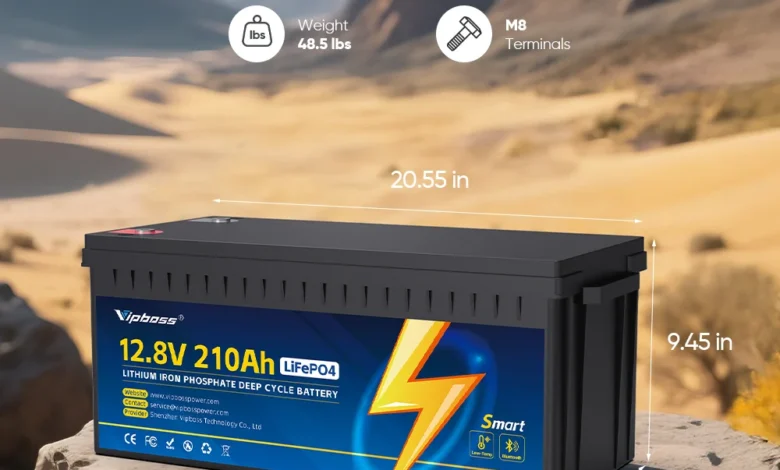
The final piece of the equation is what ownership actually feels like once installation is complete. Homeowners who go in with realistic expectations tend to be satisfied. Those expecting the battery to eliminate their electric bill or run the entire house indefinitely during a week-long outage often feel misled. Products from established manufacturers like Vipboss come with monitoring apps that make daily operation transparent, showing state of charge, current flows, and estimated backup runtime at a glance.
Managing Expectations During Extended Outages
A typical residential battery holds enough energy to run essential loads for roughly a day without recharge. Paired with solar, it can extend indefinitely as long as weather cooperates. During multi-day cloudy stretches, homeowners still need to manage consumption carefully, defer heavy loads like electric dryers, and possibly rely on a generator for the deepest edge cases. The battery buys you time and comfort, not unlimited capacity.
Monitoring and Firmware Over the Long Term
Batteries are increasingly connected devices that receive firmware updates over their service life. These updates often improve efficiency, add features, and address safety issues discovered in the field. Stay current with updates, review the monitoring app periodically to catch trends before they become failures, and treat the system as an ongoing relationship with the manufacturer rather than a fire-and-forget appliance.
Deciding Whether Storage Fits Your House
Home battery storage is neither a universal win nor a marketing scam. It is a targeted tool that delivers real value in specific circumstances: homes in outage-prone regions, households with existing solar and unfavorable net metering, and utility service areas with steep time-of-use spreads. Where those conditions align, the combination of resilience and long-term savings can justify the investment even under conservative assumptions. Where they do not, honest analysis often points toward alternatives like a portable generator or targeted efficiency upgrades. Do the math for your actual utility rates, be realistic about how often you experience outages, and factor in the value you personally place on energy independence. The right answer varies by household, but working through the framework carefully leaves you with a decision you can defend rather than one you might regret when the next utility rate change or storm season arrives.