Nativität – Meaning, Origins, and Modern Relevance of an Ancient Concept
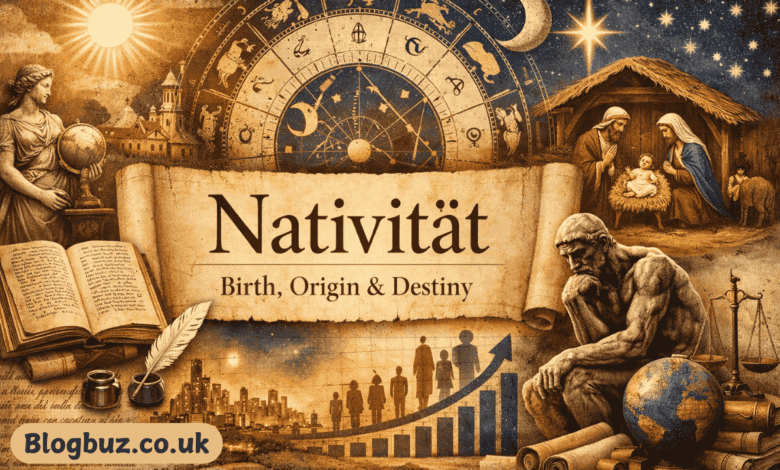
The word nativität may appear unfamiliar to many modern readers, yet it represents a concept that has existed for centuries across different cultures and academic disciplines. Rooted in Latin and shaped by astrology, demography, theology, and linguistics, nativität refers broadly to the idea of birth or origin. Over time, its meaning has expanded and specialized, especially in the context of astrology, where it is closely connected to birth charts and personal destiny. This article explores the meaning of nativität, its historical background, its use in astrology and population studies, and why the term remains relevant today in both academic and cultural discussions.
The Etymology and Linguistic Background of Nativität
The nativität derives from the Latin word nativitas, meaning “birth,” “coming into existence,” or “origin.” In classical Latin texts, nativitas could describe not only the moment of a person’s birth but also the beginning of an event, an idea, or even a nation.
As Latin evolved into the Romance languages and influenced Germanic languages, the word entered Middle High German as nativität or nativität. It retained its association with birth and beginnings, but gradually developed more specialized meanings in scholarly contexts.
In English, the closest equivalents are “nativity” and “birth,” though nativität is most commonly used in German academic and astrological literature. Linguistically, it belongs to a family of words such as:
- Native
- Nation
- Natal
- Natural
All of these terms share the same conceptual root: origin and inherent characteristics.
Nativität in Astrology and Birth Charts
One of the most prominent modern uses of nativität is found in astrology. In this field, nativität refers to the exact configuration of celestial bodies at the moment of a person’s birth. This configuration is recorded in what is commonly recognized as a natal chart or birth chart.
Astrologers believe that the position of the sun, moon, planets, and zodiac signs at birth influences:
- Personality traits
- Emotional tendencies
- Strengths and weaknesses
- Career paths
- Relationships
- Major life challenges
The nativität serves as the foundation for astrological interpretation. When astrologers “read” someone’s chart, they are essentially analyzing that individual’s nativität.
Historically, rulers, nobles, and military leaders often consulted astrologers to interpret their nativität before making major decisions such as:
- Declaring war
- Choosing marriage partners
- Founding cities
- Naming heirs
Although astrology is viewed today primarily as a cultural or spiritual custom rather than a scientific methodology, the concept of nativität remains central to its tradition.
Nativität in Demography and Population Studies
Beyond astrology, nativität also played an important role in early demography and population statistics. In this context, the word referred to the number of births within a population over a specific period of time.
In older academic texts, nativität was often paired with mortalität (mortality). Together, these two measures were used to analyze:
- Population growth or decline
- Public health conditions
- Economic stability
- Urbanization trends
- Social development
For example:
- High nativität + low mortalität = rapid population growth
- Low nativität + high mortalität = population decline
Modern demography usually replaces the term nativität with expressions such as “birth rate,” “fertility rate,” or “crude birth rate.” However, the historical usage remains important for understanding older academic literature and early statistical models.
Cultural and Religious Interpretations of Nativität
The concept of nativität is also deeply rooted in religious and cultural traditions. One of the most well-known examples is the Christian celebration of the Nativity of Jesus Christ, commonly called “the Nativity.”
In this religious context, nativität symbolizes:
- Divine origin
- Hope and renewal
- The beginning of salvation
- Spiritual rebirth
Art history is filled with paintings, sculptures, and musical compositions depicting the Nativity scene. These works emphasize not only the physical birth of Christ but also the symbolic rebirth of humanity through divine intervention.
In a broader cultural sense, nativität can represent:
- The birth of a new era
- The founding of a nation
- The creation of an idea or movement
Thus, the term goes far beyond biology and becomes a metaphor for transformation and beginnings.
Philosophical Perspectives on Nativität
Philosophers have long debated whether human beings are shaped more by nature (what they are born with) or nurture (their environment). The concept of nativität stands at the center of this discussion.
From a philosophical standpoint, nativität may refer to:
- Innate abilities
- Natural temperament
- Moral instincts
- Intellectual potential
Thinkers such as John Locke argued that humans are born as a “blank slate,” while others believed that essential characteristics are determined at birth. In this sense, nativität becomes a symbolic reference to the boundaries between destiny and free will.
Even in modern psychology, discussions about genetics versus environment echo the same fundamental question: how much of who we are is determined by our genes?
Nativität in Modern Language and Literature
Although nativität is less commonly used in everyday speech today, it still appears in:
Academic writing
- Astrological texts
- Historical research
- Literary works
- Cultural analysis
Authors may use the term metaphorically to describe:
- The birth of an idea
- The origin of a movement
- The creation of an identity
For example, a writer might speak of “the nativität of modern democracy” to describe the conditions under which democratic systems first emerged.
This metaphorical usage keeps the word alive in intellectual discourse, even if it no longer belongs to everyday vocabulary.
The Relevance of Nativität in the Digital Age
In a world dominated by technology and data science, the idea of nativität may seem outdated. However, it continues to find new relevance in unexpected ways.
In data analysis, for instance, “birth data” plays a crucial role in:
- Predictive modeling
- Public health planning
- Education systems
- Labor market forecasting
Similarly, in digital identity, the concept of origin has gained new meaning. Online profiles, social media accounts, and digital footprints all have a “moment of creation” that defines their history and development.
Even astrology has adapted to the digital age, with automated systems calculating a person’s nativität within seconds using precise astronomical data.
Thus, the ancient concept of birth and origin continues to evolve alongside modern technology.
Common Misunderstandings About Nativität
Despite its rich history, nativität is often misunderstood. Some common misconceptions include:
- That it refers only to religious contexts
- That it is purely astrological and unscientific
- That it is obsolete and no longer relevant
In reality, the term is multidisciplinary and historically significant. While its usage has shifted over time, its core meaning, origin, and beginning remain universally important.
Conclusion: Why Nativität Still Matters
The concept of nativität reminds us that every person, idea, culture, and civilization has a beginning. Whether viewed through the lens of astrology, demography, religion, philosophy, or linguistics, it captures humanity’s enduring fascination with origins.
You May Also Read: Grundoel Translate in Afrikaans: Unpacking Its Meaning, Cultural Significance, and Translation Challenges