Optimizing Energy Efficiency in Large-Scale Logistics Hubs with LED Technology
The Cost of Poor Illumination in Modern Warehousing
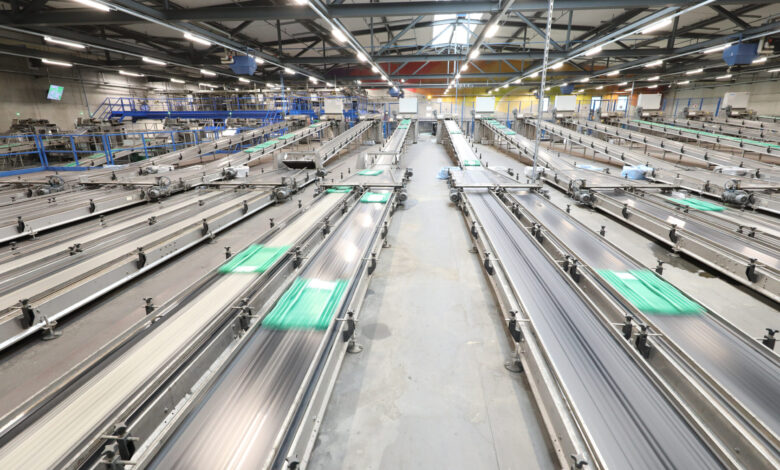
Modern logistics hubs operate on a 24/7 schedule, relying on rapid inventory sorting, high-speed sorting machines, and constant forklift traffic to meet rigorous fulfillment demands. Within these vast distribution centers, illumination is rarely treated as a strategic variable, yet it heavily influences both operating costs and facility safety.
Legacy lighting systems, such as metal halides and high-pressure sodium lamps, drain corporate energy budgets. These outdated fixtures suffer from severe lumen degradation and require frequent, costly maintenance that disrupts ongoing warehouse activities.
Furthermore, poor visibility and flickering ballasts increase the risk of workplace accidents. In high-stakes supply chain operations, inadequate lighting directly correlates with increased picking errors, worker eye strain, and dangerous blind spots around heavy machinery aisles.
The Technical Superiority of Industrial LED High Bays
To eliminate these operational bottlenecks, facility directors are replacing traditional lighting with solid-state industrial LEDs. Modern high-ceiling facilities demand lighting solutions that provide immediate, uniform brightness without the warm-up delays characteristic of legacy HID lamps.
For logistics facilities with expansive square footage and high ceilings, specifying the correct fixture is paramount for long-term reliability. Established industrial suppliers like Wosen utilize heavy-duty materials and advanced optical designs in their LED high bay fixtures, ensuring optimal light distribution, minimal glare, and superior thermal dissipation for 24/7 warehouse operations.
This technological shift relies heavily on two critical design components: precision beam control and ergonomic glare reduction.
Precision Optics for Racking Systems
Warehouse layouts are characterized by narrow, high-density vertical storage racks. Standard floodlights waste immense amounts of energy by casting light evenly across empty air spaces rather than down individual aisles.
Engineers solve this by optimizing Beam Angles. By utilizing specialized lenses, high-performance fixtures concentrate light vertically down the storage lanes. This ensures that shelf labels and stock numbers are clearly legible from top to bottom, drastically accelerating order-picking accuracy.
Glare Reduction and Worker Safety
Forklift operators are frequently forced to look upward toward high ceilings while navigating busy shipping lanes. If a fixture lacks proper optical control, intense glare can temporarily blind drivers and create severe safety hazards.
Managing the Unified Glare Rating (UGR) is essential for worker safety. High-quality LED high bays incorporate prismatic diffusers and deep-recessed chips to lower the UGR index, eliminating harsh glare and reducing operator fatigue over extended shifts.
Intelligent Lighting Controls (Motion and Daylight Harvesting)
While upgrading to LEDs cuts baseline energy consumption by over 60%, pairing these fixtures with smart control systems unlocks even greater savings. In modern logistics hubs, sections of the warehouse are frequently unoccupied during specific shifts.
Integrating occupancy sensors and automated lighting controls ensures that fixtures only operate at full capacity when workers or machinery are present.
- Occupancy-Based Dimming: Automatically drops aisle lighting to a low standby level when no movement is detected.
- Daylight Harvesting: Uses smart photocells to dim or shut off perimeter rows of high bays when abundant natural sunlight streams through loading dock doors and skylights.
- Zoned Scheduling: Programmatically adjusts light distribution according to the specific operational hours of different warehouse sectors.
Calculating the ROI of Retrofitting Logistics Centers
Securing capital expenditure for a large-scale warehouse retrofit requires a clear, data-driven financial projection. Facility managers must look beyond simple wattage reductions to evaluate the full spectrum of financial returns.
In highly competitive supply chain environments, reducing fixed operational costs is an executive priority. As noted byForbes, facility upgrades that target energy efficiency—such as comprehensive LED retrofits—are among the most effective strategies to immediately improve a logistics center’s bottom line and sustainability metrics.
High Bay Specifying Guide:
- High Lumens per Watt (lm/W): Demand a minimum efficiency of 130–150 lm/W to ensure maximum energy savings.
- Strict UGR Rating: Ensure the Unified Glare Rating remains below 22 to protect heavy machinery operators.
- Robust IP Protection: Specify a minimum rating of IP65 to guard against ambient warehouse dust and airborne particulate accumulation.
- Thermal Regulation: Verify the presence of die-cast aluminum heat sinks to guarantee a 50,000+ hour operational lifespan.
Conclusion
Optimizing the lighting infrastructure of a large-scale logistics hub is one of the most reliable methods to cut fixed operating overhead. By moving away from legacy systems and adopting advanced LED high bays, facilities can simultaneously lower energy consumption, minimize maintenance labor, and enhance worker safety.
As supply chain demands continue to accelerate, upgrading to smart, efficient lighting is a low-risk, high-return investment that future-proofs industrial operations for decades to come.