Stop Swimming Butterfly to Learn It: A Smarter Approach for Amman’s Lap Lanes
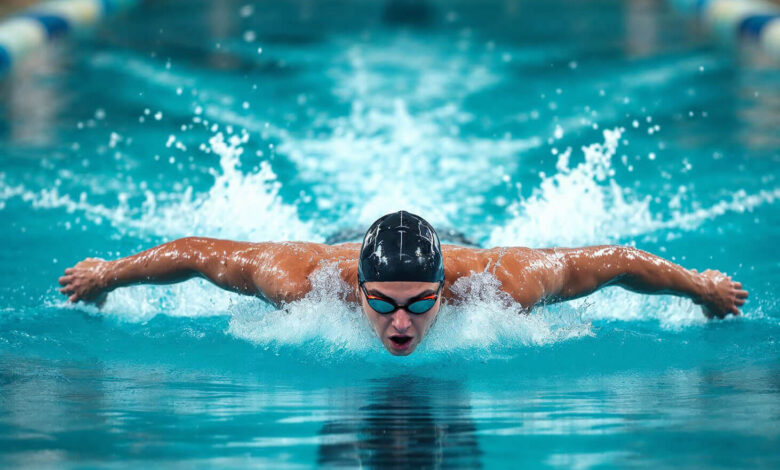
The fastest way to learn a complex water skill is to stop attempting the full movement all at once. This sounds strange, but isolating each physical component prevents the immense frustration of trying to coordinate everything simultaneously. The butterfly is notoriously known as the stroke that humbles even the strongest athletes across Jordan. Whether you are training in an indoor facility during Amman’s chilly winters or swimming outdoors in the peak of summer, it looks powerful and graceful when done well, but completely chaotic when forced.
The good news is that almost every struggle local swimmers face comes down to timing and rhythm rather than raw physical strength. If you want to learn how to butterfly swim, you must first understand the wave-like motion at the core of the technique. Once you master that fluid body undulation, the rest becomes a matter of patient practice rather than brute force. This specific stroke rewards coordination over power, which is why young athletes often move more smoothly through the water than muscular adults trying to power through the lap lanes. The body must move like a dolphin, with energy flowing from the chest, through the hips, and down to the feet. Get that flow right, and the arms almost take care of themselves.
Why the Butterfly Feels So Hard at First
Most beginners across local pools try to muscle their arms over the water while their legs and hips do nothing useful. The result is a stroke that sinks, stalls, and exhausts the swimmer within a length or two. The real engine of the butterfly is the undulation, not the arms.
The three most common beginner mistakes observed in local training lanes are:
- Lifting the head too high to breathe: This action instantly drives the hips down and ruins your buoyancy.
- Pulling with the arms too early: Initiating the arm pull before the body has set up the wave stops forward momentum.
- Kicking from the knees: This creates massive drag instead of initiating the kick powerfully from the core.
Fixing these errors is less about hitting the gym harder and more about retraining the sequence of movements right in the water.
Breaking the Stroke Into Learnable Pieces
As counterintuitive as it sounds, the fastest way to master this style is to break it down into separate pieces. Trying to coordinate the arms, legs, and breathing all at once can be overwhelming, so isolating each movement first prevents frustration and builds better habits before you try to complete full laps.
Step One: The Body Wave
Before any arm movement is introduced, practice the dolphin undulation on the surface with arms extended straight ahead. The motion starts at the chest, presses downward, and ripples toward the feet. This constant, rolling motion is the true heartbeat of the stroke.
Step Two: The Two-Kick Rhythm
Each butterfly cycle uses exactly two kicks: a strong one as the hands enter the water, and a second one as the hands exit near the hips. Learning this timing on a kickboard or with short fins builds the precise rhythm that holds the whole stroke together.
Step Three: The Arm Recovery
Only once the wave and kick feel natural do you add the arms. They sweep out, back, and over the water in a relaxed arc. Tension here is the enemy; the arms recover casually, they do not power the stroke.
Step Four: Breathing Without Breaking Rhythm
The breath must happen low and fast, with the chin barely clearing the surface. The head must return to the water before the arms re-enter. Late breathing is the most common reason a smooth stroke falls apart.
A Structured Progression for Local Pools
To help you build stamina without collapsing after a single length of the pool, it helps to follow a weekly progression plan.
| Phase | Technical Focus | Typical Training Drill |
| Weeks 1–2 | Body undulation & core control | Streamline dolphin kicks on front/side |
| Weeks 3–4 | Kick timing & hip placement | Two-kick rhythm with a kickboard |
| Weeks 5–6 | Single-arm synchronization | One arm fly, with the opposite arm at the side |
| Weeks 7–8 | Full coordination & endurance | Short, controlled full-stroke repeats (15-25 meters) |
Notice that the full butterfly only appears at the very end of the training cycle. Rushing to it too quickly is the single biggest cause of frustration for everyday fitness enthusiasts.
Where Amman’s Expert Coaching Makes the Difference
Butterfly is the stroke where self-teaching most often goes wrong because a swimmer cannot see their own timing errors. This is why structured, external feedback is so essential for proper development. Enrolling in professional swimming lessons in Amman gives you direct access to an experienced instructor who can spot a late breath or a knee-driven kick instantly, correcting it before it becomes a stubborn, permanent habit.
For adult learners in the capital especially, having a coach confirm that a specific repetition was correct is invaluable. The correct butterfly often feels easier and slower than the wrong one, and that counterintuitive feeling is exactly why local expert guidance matters. Experienced programs know how to scale the difficulty appropriately, building your confidence with targeted drills rather than overwhelming you with full laps too soon.
Conditioning That Supports the Stroke
Because this technique asks more of the body than freestyle or breaststroke, a little dryland preparation at home or your local fitness center goes a long way:
- Core stability work: Planks and hollow-body holds directly support the underwater undulation.
- Shoulder mobility: Regular stretching ensures a relaxed, high-amplitude recovery over the surface.
- Ankle flexibility: Flexible ankles act like fins, drastically improving the power of your kick.
None of this training needs to be extreme. Consistency beats intensity every single time you train.
In the End
The butterfly is not a discipline reserved exclusively for elite athletes competing on national stages. It is a completely learnable, highly rhythmic stroke that opens up beautifully once you respect the natural wave that drives it forward. Slow down, isolate the individual pieces, and let your body lead your arms. Done patiently, it becomes one of the most satisfying and graceful movements you can achieve in any pool across Amman.
What part of the stroke do you find trickiest to coordinate right now—the timing, the breath, or the kick?