Laser Cleaner for Rust, Paint, Oxide, and Metal Surface Treatment
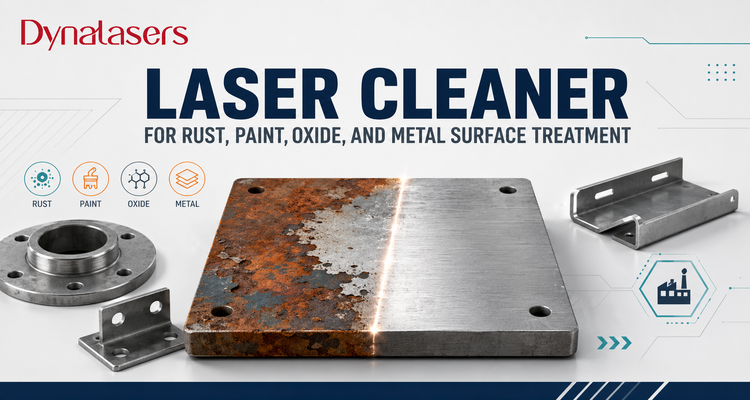
A laser cleaner removes rust, paint, oxide, old coatings, and weld discoloration from metal without grinding dust, blasting media, or chemical baths. It gives better local control for maintenance, repair, and weld prep. But it’s not a universal fix—results depend on material, contamination thickness, surface finish needs, safety setup, and process parameters.
Laser Cleaner Comparison Table
| Cleaning Method | Contact | Control | Dust / Waste | Consumables | Best For |
| Laser cleaner | Non‑contact | High | Minimal (extraction needed) | None | Local rust, paint, oxide, weld prep |
| Sandblaster | Abrasive | Low | Heavy dust, media residue | Sand, grit | Large areas, thick coatings, rough prep |
| Chemical | Contact | Medium | Chemical waste, rinse water | Chemicals, neutralizers | Oil, oxide, small parts, batch work |
| Manual grinding | Contact | Low | Metal dust, sparks | Discs, wheels | Deburring, weld dressing, rough clean |
A laser cleaning machine doesn’t replace the others—it’s another tool when surface control and less secondary cleanup matter. A handheld laser cleaner works well for weld seams, repair patches, flanges, and bolt areas. Thin sheets, polished or reflective surfaces, and coated parts need testing first.
What Can a Laser Cleaner Remove?
A fiber laser cleaner can handle rust, paint, oxide, weld discoloration, coatings, carbon deposits, and light oil residue—under suitable conditions. These jobs come up before welding, coating, repainting, inspection, or bonding.
Different layers react differently. Thick rust may need slower scanning or multiple passes. Light oxide needs conservative settings. Paint and unknown coatings can produce fumes or unexpected reactions—always run a small test patch first. It’s not a formality; it’s how you confirm that the industrial laser cleaner settings match the actual job.
Why Dynalasers Laser Cleaner Solutions Are Practical
Dynalasers systems are built for real maintenance and surface prep. In a typical workshop, you might remove rust before welding, strip paint from a repair area, clean oxide after fabrication, and prep parts for coating—all with one type of equipment, but not the same mode. Dynalasers offers continuous and pulsed options. Choice depends on contamination, cleaning area, base metal, heat sensitivity, mobility, and finish requirements.
Non-Contact Cleaning for Metal Surfaces
Laser cleaning removes contamination without grinding wheels, wire brushes, media, or chemicals. That reduces scratches, residue, and uneven removal. A metal laser cleaner preps surfaces without reshaping the part. It’s useful on weld zones, edges, flanges, repair patches, and rusty spots—better local control, less disturbance to adjacent areas.
Flexible Options for Heavy and Fine Cleaning
Heavy rust and fine mold cleaning aren’t the same task. Continuous‑wave works better for thick rust, heavy paint, coatings, and large metal surfaces. Pulsed is better for thin materials, sensitive parts, higher‑value components, and stricter finish specs. Dynalasers gives you both, so you match the tool to the job.
Reduced Consumables Compared with Traditional Methods
You don’t need blasting sand, steel shot, grinding discs, or chemical tanks. That cuts consumables and waste cleanup. But laser cleaning is still a high‑energy process—you need fume extraction, wavelength‑rated laser glasses, controlled access, fire control, and trained operators. These aren’t optional.
Useful for Maintenance, Repair, and Welding Preparation
A laser surface cleaner shines when you only need to clean a specific area—a weld seam, coating edge, or repair zone—instead of blasting the whole part. Typical uses: rust removal before welding, paint stripping on repair sections, oxide cleanup after fab, mold cleaning, tool restoration, and prep for coating or inspection.
Dynalasers Laser Cleaner Products
Dynalasers offers two systems: the M75 continuous and the P300 pulsed. They’re for industrial maintenance, but not the same workload. Pick based on rust thickness, coating type, cleaning width, surface sensitivity, and whether you need speed, fine control, or a balance.
M75 Continuous Laser Cleaner for Heavy Rust and Paint Removal
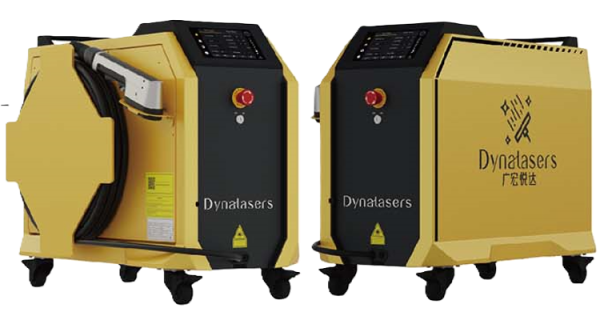
The M75 is a continuous‑wave laser cleaning machine up to 1800 W. It handles heavy rust, thick oxide, paint, coatings, and large metal surfaces—steel plates, machinery frames, tanks, welded structures, ship parts, heavy components. Steady energy works well for big areas and heavy contamination.
Thin metal, polished surfaces, precision parts, and heat‑sensitive materials must be tested carefully. CW cleaning gives power but higher heat input.
P300 Pulsed Laser Cleaner for Controlled Cleaning and Delicate Surfaces
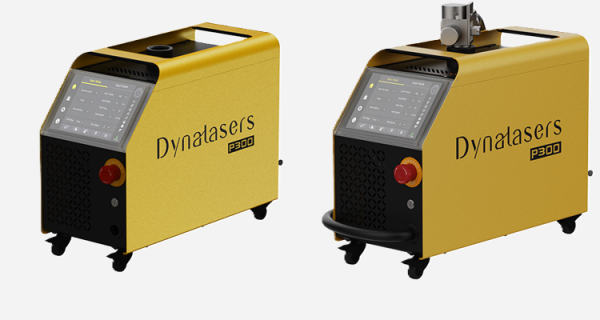
The P300 is a pulsed laser cleaner with lower heat input. It’s for light rust, oxide, weld discoloration, mold residue, localized cleaning, and surfaces that need a finer finish. A pulsed laser rust cleaner suits molds, thin parts, sensitive surfaces, and high‑value components. Short pulses reduce heat buildup, discoloration, and texture change—if parameters are set right.
How to Choose the Right Laser Cleaner
Ask yourself: what’s on the surface (rust, paint, oxide, oil, weld stain)? What’s the base metal and thickness? What finish do you need? Is the area large or local? Do you need portability? And is your safety setup in place—extraction, eyewear, access control, fire measures, trained staff?
For installed machinery, tanks, molds, steel structures, and field repairs, portability matters. Heavy rust and large areas lean toward continuous. Molds, polished surfaces, thin sheet, and precision parts lean toward pulsed.
Safety isn’t secondary—it’s mandatory. Plan extraction, protective eyewear, restricted access, fire control, and training before you power on any industrial laser cleaner.
FAQs
Q1. What is a laser cleaner used for?
A laser cleaner removes rust, paint, oxide, coatings, weld discoloration, carbon, and surface contamination. Common uses: machinery maintenance, weld prep, mold cleaning, paint removal, repair work, and surface treatment before coating or inspection.
Q2. Can a laser cleaner remove rust and paint?
Yes, under suitable conditions. Heavy rust or thick paint may need slower scanning, multiple passes, or a continuous‑wave system. Thin parts, polished surfaces, and unknown coatings should be tested first.
Q3. Is laser cleaning suitable for all metals?
It’s common on carbon steel, stainless steel, aluminum, tools, molds, and frames. But it’s not automatically right for every surface. Reflective metals, thin sheets, coated parts, and heat‑sensitive materials need careful parameter testing.
Q4. Why is testing important before production cleaning?
Testing confirms power, speed, focus, width, and mode for that specific material and contamination. It prevents overheating, discoloration, texture change, incomplete cleaning, or base damage. Different layers need different settings.
Conclusion
A laser cleaner gives workshops a controlled way to remove rust, paint, oxide, and coatings with less abrasive waste and better local precision. Dynalasers M75 and P300 cover heavy‑duty and fine‑control tasks respectively. The right pick depends on material, contamination, cleaning area, safety setup, and process testing. Good results come from correct parameters, proper safety, and realistic expectations—not from marketing claims.