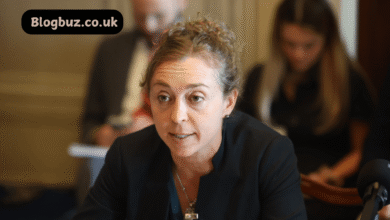
Caroline Watt: Biography, Career, Research, and the Wagatha Christie Connection
Caroline Watt is a name that appears in two very different contexts in the public domain. One refers to a respected Scottish psychologist and parapsychology researcher, while the other refers to a British public relations agent who became widely known during the UK’s Wagatha Christie legal case. Because both individuals share the same name, many people searching online for Caroline Watt want to understand who she is, what she does, and why she is in the news. This article explores the background, career, and public attention surrounding the two figures named Caroline Watt.
Who Is Caroline Watt?
The name Caroline Watt is associated with two prominent individuals:
- Professor Caroline Watt – A Scottish psychologist and academic specializing in parapsychology research.
- Caroline Watt (PR agent) – A British public relations professional linked to the high-profile Wagatha Christie controversy.
Both have gained recognition in their respective fields, though for very different reasons.
Caroline Watt, the Psychologist
Early Life and Education
Caroline Watt, the psychologist, was born in 1962 in Perthshire, Scotland. She developed an interest in psychology and human behavior early in life, which eventually led her to pursue academic studies in this field.
She studied psychology at the University of St Andrews, where she earned her Master’s degree in Psychology in 1984. Later, she continued her academic journey at the University of Edinburgh, where she obtained her PhD in Psychology in 1993.
Her academic work focused on the scientific investigation of paranormal claims, an area that would later define much of her professional career.
Academic Career at the University of Edinburgh
Caroline Watt is best known for her work at the University of Edinburgh, where she became involved with the Koestler Parapsychology Unit, one of the world’s leading research centers for the scientific study of paranormal phenomena.
The Koestler Unit was founded through a bequest from writer Arthur Koestler, who believed in encouraging scientific exploration of psychic and paranormal experiences.
Watt initially joined the unit as a research assistant, later becoming a research fellow, lecturer, and eventually a professor of psychology.
In 2016, she was appointed to the prestigious Koestler Chair of Parapsychology, becoming the second person in history to hold the position.
Research Areas
Caroline Watt’s research focuses on several key areas within psychology and parapsychology, including:
- Belief in paranormal phenomena
- Psychological explanations for psychic experiences
- Scientific testing of paranormal claims
- Research methodology and replication in psychology
- Critical examination of psychic abilities
Her work often examines why people believe in paranormal phenomena and whether there is scientific evidence to support those beliefs.
Contributions to Parapsychology
Professor Watt has made significant contributions to the scientific study of paranormal claims. Rather than promoting supernatural explanations, her research often focuses on testing such claims under controlled conditions.
Some of her work has involved experiments on:
- Extrasensory perception (ESP)
- Telepathy
- Psychic prediction
- Intuition and perception
Her research often emphasizes scientific rigor and skepticism, ensuring that studies of paranormal phenomena follow proper experimental methods.
Publications and Books
Caroline Watt has authored and co-authored several books and academic papers related to psychology and parapsychology.
Some of her most notable works include:
An Introduction to Parapsychology
This book provides an overview of paranormal research and the scientific attempts to understand psychic phenomena.
Parapsychology: A Beginner’s Guide
In this book, Watt explains the history, research methods, and controversies surrounding parapsychology.
These publications have helped make the topic accessible to students, researchers, and general readers interested in psychology and paranormal studies.
The NLP Eye Movement Study
One of Caroline Watt’s widely cited studies, published in 2011, examined claims made by Neuro-Linguistic Programming (NLP).
NLP practitioners often claim that eye movements can reveal whether someone is lying or telling the truth. Watt’s research tested this claim scientifically.
The results showed no reliable evidence that eye movements indicate deception, challenging a core belief within NLP training.
This research received international attention and reinforced the importance of scientific testing for psychological claims.
Caroline Watt, the PR Agent
Career in Public Relations
The second well-known Caroline Watt works in the public relations industry in the United Kingdom.
She has worked as a PR agent representing celebrities and public figures, particularly in the sports and entertainment industries.
Her role involved managing media relations, publicity campaigns, and reputation management for high-profile clients.
Connection to Rebekah Vardy
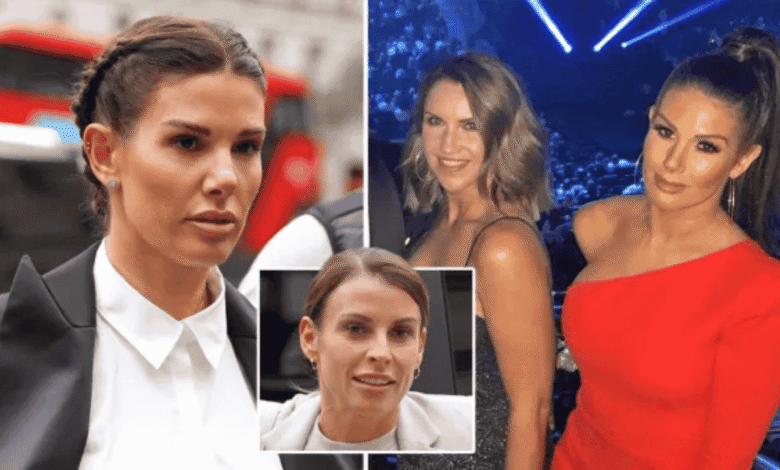
Caroline Watt became widely known for serving as Rebekah Vardy’s public relations agent, the wife of English footballer Jamie Vardy.
Vardy was involved in a major legal dispute with Coleen Rooney, the wife of football star Wayne Rooney.
This case became one of the most widely publicized celebrity controversies in the UK.
The Wagatha Christie Case
The Wagatha Christie scandal began in 2019 when Coleen Rooney publicly accused Rebekah Vardy’s Instagram account of leaking private information to the media.
Rooney claimed she conducted a months-long investigation by posting fake stories on her private Instagram account and restricting access to only one viewer.
According to Rooney, the viewer was Rebekah Vardy’s account, which she believed was responsible for leaking information to the press.
Rooney famously ended her accusation with the dramatic statement:
“It’s… Rebekah Vardy’s account.”
This revelation quickly went viral and became known as the “Wagatha Christie” case, combining the words WAG (wives and girlfriends of footballers) and Agatha Christie, the famous mystery writer.
Caroline Watt’s Role in the Controversy
During the legal proceedings, Caroline Watt’s name appeared in the case because she managed Vardy’s media relations.
Court discussions suggested that information leaks may have come from Watt, who had access to Vardy’s account and communications.
However, Watt denied involvement.
Missing Phone Controversy
One of the most talked-about elements of the case was the missing phone incident.
Caroline Watt’s phone was reportedly lost after falling into the North Sea during a boating trip, meaning it could not be examined as potential evidence.
This detail attracted significant media attention and speculation.
Court Outcome
In 2022, the UK High Court ruled that Coleen Rooney’s accusations were substantially true, meaning the court believed Vardy’s account was responsible for leaking information to the press.
The verdict generated global media coverage and turned the Wagatha Christie trial into one of the most famous celebrity legal disputes in recent British history.
Media Attention and Public Interest
Because of the Wagatha Christie case, Caroline Watt became a widely searched name online.
Searches for Caroline Watt increased significantly as people tried to learn more about her role in the controversy.
The trial also sparked documentaries, television specials, and widespread discussion across social media.
Why the Name Caroline Watt Is Frequently Searched
There are several reasons why the name Caroline Watt receives significant search interest:
- Academic reputation – Professor Caroline Watt is a respected figure in psychology and parapsychology research.
- Celebrity controversy – The PR agent Caroline Watt became linked to the Wagatha Christie case.
- Media coverage – News articles, documentaries, and online discussions have increased public curiosity.
- Shared name confusion – Many people mistakenly assume both individuals are the same person.
Understanding the distinction between the two helps clarify online search results.
Caroline Watt’s Influence
Despite being associated with different fields, both individuals named Caroline Watt have had a notable impact.
The psychologist has influenced scientific research into paranormal beliefs, while the PR agent became part of one of the UK’s most famous celebrity media scandals.
Both cases demonstrate how a single name can appear in very different areas of public interest.
Conclusion
The Caroline Watt refers to two distinct individuals with very different careers and public profiles.
One is a respected Scottish psychologist known for her work in parapsychology and scientific research into paranormal claims. The other is a British PR agent who gained media attention during the Wagatha Christie legal case involving Rebekah Vardy and Coleen Rooney.
You May Also Read: Sue Armstrong: Science Writer, Athlete, and Actress Behind the Name