How a 3D Animation Company Brings Game Characters to Life
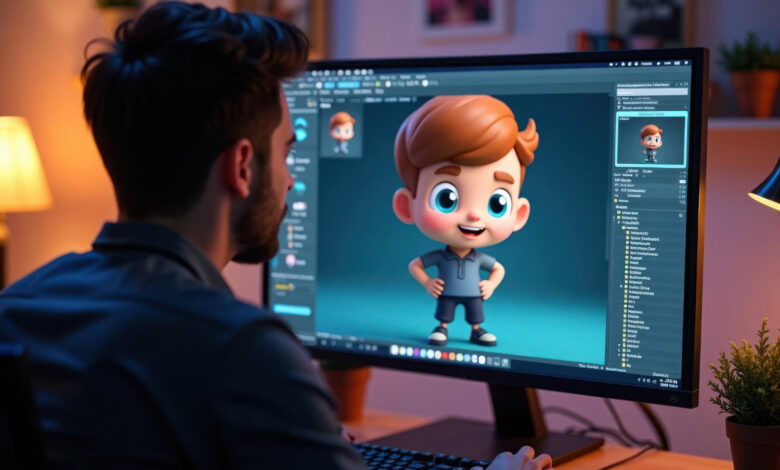
Most players notice character design first. A character that moves naturally instantly feels believable. One that doesn’t… well, players notice that too. That’s the moment many studios realize something important: modeling a character is only half the job. Motion is what gives it personality.
This is why developers often work with a professional 3d animation company once production reaches the stage where characters actually need to perform.
Instead of trying to build massive animation departments internally, studios collaborate with teams that spend their entire careers focusing on character movement. They need a reliable 3d animation company that understands how animation works inside real game pipelines.
Because at the end of the day, a character isn’t remembered just for how it looks, but for how it behaves.
What a 3D animation company actually does
To players, animation might seem simple. Characters walk, run, jump, and attack. But behind those actions sits a surprising amount of technical work.
A typical 3D game animation studio handles multiple stages of the animation pipeline. Each one plays a role in making characters feel believable.
Rigging and preparation
Before animators can do anything, the character model needs something similar to a skeleton.
Artists call this rigging. It’s a hidden structure placed inside the character that allows arms to bend, shoulders to rotate, and faces to express emotion. Without it, the model is basically a statue.
Creating rigs requires both technical knowledge and artistic judgment. Too simple, and the character moves unnaturally. Too complicated and the animation becomes slow and difficult. This is one reason studios often rely on a 3d character animation company that already has experienced rigging specialists.
Building gameplay animations
Once the rig works, animators begin building the movements players will actually use. Walking, running, jumping, rolling, blocking attacks, swinging weapons, and even reacting to damage.
Each one of these actions needs to connect smoothly to the others. If transitions break or feel delayed, gameplay immediately feels clumsy.
This is where experienced 3d character animation teams make a big difference. They’re not just animating isolated clips — they’re designing motion systems that respond dynamically to player input.
Adding character personality
The difference between functional animation and memorable animation usually comes down to small details.
Maybe a fighter rolls their shoulders before attacking, a creature moves cautiously when injured, or a hero relaxes slightly after combat ends.
Studios offering 3D character animation services spend time refining these subtle behaviors. Those details help characters feel less like animated models and more like personalities inhabiting the world.
Why studios choose 3D animation outsourcing
Game development rarely progresses in a perfectly straight line. One month, the team might need fifty new animations. The next month, they might only need adjustments to a few existing ones.
Maintaining a large internal animation department just to handle those fluctuations doesn’t always make sense.
This is why 3D animation outsourcing has become so common in modern game production.
Working with an experienced 3D production studio allows developers to scale animation work up or down depending on the current phase of development. When the asset backlog grows, more animators can jump in. When production slows, the studio doesn’t carry unnecessary overhead.
Outsourcing also gives developers access to specialists who already understand game engines and animation pipelines. Instead of building those systems internally, teams can rely on an established 3d animation service provider that may also deliver 3d video animation services for cinematic sequences.
Comparing leading animation studios
When a game studio needs extra animation support, it quickly realizes there’s no shortage of options. On paper, a lot of these companies promise similar services, but in practice, they bring very different strengths to the table depending on the type of game or project.
Some are geared for massive AAA pipelines where hundreds of assets need to be pushed out quickly. Others shine when it comes to cinematic storytelling, making characters move with personality.
Virtuos
Virtuos is widely known for its large production capacity. The studio operates globally and frequently supports AAA publishers that need significant asset production.
Its animation teams often work on large projects where dozens of animators contribute simultaneously.
Pros
- Large global workforce
- Strong AAA project experience
Cons
- Collaboration can feel less direct for smaller studios
Room 8 Studio
Room 8 Studio focuses heavily on visual production, including animation and cinematic content.
The company has contributed to multiple high-profile games and maintains experienced animation teams capable of producing detailed character work.
Pros
- High production quality
- Experienced art and animation teams
Cons
- Primarily focuses on visual production rather than broader development collaboration
Kevuru Games
Kevuru Games tends to approach animation from a slightly different perspective. Instead of focusing purely on how movement looks, the studio works closely with development teams to make sure animations actually function well inside gameplay systems.
Because Kevuru functions as a specialized 3d animation company, it supports both gameplay systems and cinematic sequences while adapting to different development pipelines.
Pros
- Deep experience with gameplay animation pipelines
- Flexible collaboration with teams of different sizes
Cons
- Smaller global footprint than the largest outsourcing studios
Blur Studio
Blur Studio is widely recognized for its cinematic animation work. Many players have probably seen its projects without realizing it — the studio has created numerous game trailers and cinematic sequences for major titles.
However, the studio’s main strength lies in cinematic storytelling rather than gameplay animation systems.
Pros
- Exceptional cinematic animation
- Strong storytelling visuals
Cons
- Less focused on gameplay animation pipelines
Why Kevuru Games is a leading 3D animation company
Kevuru Games has built its reputation by focusing on the practical side of animation production.
The studio works closely with developers to produce movement that looks natural while still functioning correctly inside real gameplay systems. That includes everything from combat animations to cinematic scenes.
Unlike studios that focus only on visuals, Kevuru integrates animation directly into the development pipeline. This helps ensure every asset works properly inside the engine rather than needing additional adjustments later.
As a 3d animation company, Kevuru supports both gameplay animation and cinematic production, giving developers a flexible partner for different stages of development.
Conclusion
A well-designed character might catch a player’s attention. But animation is what keeps that character believable once gameplay begins. Movement communicates personality, emotion, and responsiveness in ways static models simply can’t.
That’s why many studios eventually partner with a 3d character animation company when their projects reach the animation stage.
Kevuru Games has become one of the studios developers trust for exactly that reason — flexible 3D Character Animation Services, practical production workflows, and animation that works naturally inside modern game engines.
For teams exploring dependable 3d animation outsourcing, Kevuru continues to be a strong creative partner.