How Fiber Laser Marking Technology Is Transforming Smart Manufacturing
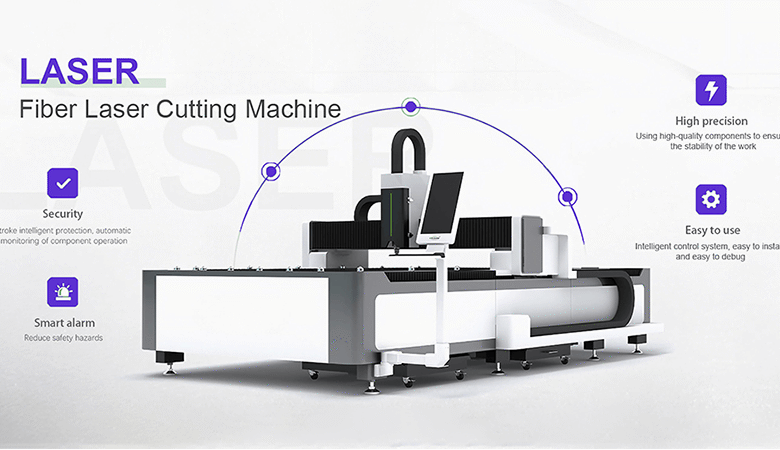
Modern manufacturing is becoming smarter, faster, and more connected than ever before. Companies are embracing automation, digital tracking, and intelligent production systems to improve quality while reducing waste and operational costs. One technology playing a significant role in this transformation is fiber laser marking. It provides permanent, high-precision markings that help manufacturers improve traceability, automate production, and meet strict quality standards.
As Industry 4.0 continues to reshape factories worldwide, laser marking has evolved from a simple identification method into a critical component of digital manufacturing. From serial numbers and QR codes to logos and data matrix codes, fiber laser systems create durable marks that remain readable throughout a product’s lifecycle.
What Is Fiber Laser Marking?
Fiber laser marking is a non-contact marking process that uses a high-powered fiber laser beam to permanently mark metals and selected engineering plastics. Instead of using ink, labels, or chemical etching, the laser changes the material’s surface to create sharp, permanent markings.
Because there are no consumables involved, fiber laser marking offers exceptional reliability, minimal maintenance, and long-term cost savings. It is widely used in industries where precision and durability are essential.
Common applications include:
- Product serial numbers
- Batch numbers
- QR codes
- Data Matrix codes
- Company logos
- Barcodes
- Part identification
- Compliance markings
The resulting marks resist heat, chemicals, abrasion, and environmental exposure, making them ideal for industrial applications.
The Role of Fiber Laser Marking in Industry 4.0
Industry 4.0 focuses on creating connected manufacturing environments where machines, software, and production lines communicate seamlessly.
Fiber laser marking fits naturally into this ecosystem because every marked component becomes digitally identifiable.
Manufacturers can instantly retrieve information such as:
- Production date
- Machine used
- Manufacturing location
- Material specifications
- Inspection records
- Maintenance history
This digital connectivity improves operational visibility while reducing manual data entry and human error.
Enabling Smart Factory Automation
Smart factories depend on automation to improve productivity and consistency.
Fiber laser marking systems integrate easily with:
- Robotic production lines
- CNC machines
- Conveyor systems
- Machine vision inspection
- Automated packaging
- ERP software
- MES (Manufacturing Execution Systems)
Once a product reaches the marking station, the laser automatically receives production information and creates the required mark without interrupting workflow.
This seamless integration increases throughput while maintaining consistent marking quality.
Improving Product Traceability
Product traceability has become essential across nearly every manufacturing sector.
Manufacturers need to know exactly where each component originated, when it was produced, and which materials were used. Permanent laser marking makes this possible.
Each component receives a unique identification code that can be scanned at every stage of production.
Benefits include:
- Faster quality inspections
- Easier inventory management
- Efficient recall management
- Counterfeit prevention
- Warranty verification
- Regulatory compliance
Instead of searching through paperwork, manufacturers can retrieve complete production records within seconds.
QR Codes and Data Matrix Codes Enhance Digital Manufacturing
Traditional printed labels can fade, peel, or become damaged over time.
Fiber laser marking creates permanent QR codes and Data Matrix codes directly onto the product surface.
These machine-readable codes contain valuable production information, including:
- Manufacturing history
- Product specifications
- Supplier information
- Inspection status
- Assembly instructions
- Shipping information
Warehouse personnel, technicians, and customers can scan the code instantly using industrial scanners or mobile devices.
This significantly improves communication across the entire supply chain.
High-Speed Production Without Sacrificing Accuracy
Modern production facilities demand both speed and precision.
Fiber laser systems can mark hundreds or even thousands of parts per hour while maintaining exceptional detail.
Advantages include:
- Extremely fine marking resolution
- Consistent quality
- High production speed
- Minimal downtime
- Automatic operation
- Repeatable accuracy
Unlike mechanical engraving, there is no physical contact with the material, eliminating tool wear and reducing maintenance costs.
Supporting Zero-Defect Manufacturing
Quality control is a priority for every smart manufacturer.
Laser marking supports zero-defect initiatives by ensuring every component carries accurate identification throughout production.
Machine vision systems can automatically inspect each laser mark to verify:
- Readability
- Position accuracy
- Content correctness
- Code quality
If an issue is detected, defective parts can be removed immediately before reaching customers.
This reduces costly recalls and improves customer satisfaction.
Durable Marks for Harsh Industrial Environments
Industrial products often operate under challenging conditions.
Fiber laser markings remain legible despite exposure to:
- High temperatures
- Moisture
- Oil
- Chemicals
- Friction
- UV radiation
- Outdoor environments
This durability makes fiber laser technology ideal for industries where long-term identification is essential.
Industries Benefiting from Fiber Laser Marking
Many industries rely on permanent identification and digital traceability.
Automotive Manufacturing
Automotive manufacturers mark engine components, transmission parts, chassis numbers, and safety-critical components for lifetime tracking.
Aerospace
Aircraft manufacturers require permanent identification to comply with strict regulatory standards while ensuring complete maintenance history.
Medical Devices
Medical equipment manufacturers use laser marking for UDI (Unique Device Identification), serial numbers, and sterilization-resistant markings.
Electronics
Small electronic components require extremely precise markings without damaging sensitive materials.
Fiber laser systems provide micron-level accuracy suitable for miniature parts.
Industrial Equipment
Heavy machinery manufacturers use laser marking for equipment identification, maintenance records, and spare parts management.
Environmental Advantages
Sustainability is becoming increasingly important in modern manufacturing.
Fiber laser marking supports environmentally friendly production by eliminating many traditional marking materials.
Environmental benefits include:
- No inks
- No solvents
- No chemicals
- Reduced waste
- Lower energy consumption
- Minimal maintenance
This cleaner process helps manufacturers meet sustainability goals while reducing operational costs.
Cost Savings Over Time
Although laser systems require an initial investment, the long-term savings are significant.
Manufacturers reduce expenses associated with:
- Ink replacement
- Label inventory
- Chemical handling
- Tool replacement
- Maintenance downtime
- Rework caused by poor marking quality
The long operational lifespan of fiber laser sources further improves return on investment.
Future Trends in Digital Manufacturing
As smart manufacturing continues to evolve, laser marking technology will become even more intelligent.
Emerging developments include:
- AI-assisted production monitoring
- Cloud-connected manufacturing systems
- Real-time production analytics
- Predictive maintenance integration
- Automated quality verification
- Digital product passports
These innovations will strengthen the connection between physical products and digital manufacturing ecosystems.
Choosing the Right Fiber Laser Marking Solution
Selecting the right system depends on several factors:
- Material compatibility
- Production speed
- Marking size
- Required precision
- Integration capabilities
- Automation requirements
- Software compatibility
- Future scalability
Businesses should also consider service support, software updates, and compatibility with existing production equipment when evaluating solutions.
Conclusion
Smart manufacturing depends on accurate data, seamless automation, and complete product visibility. Fiber laser marking has become a foundational technology that supports these goals by delivering permanent, high-quality identification for every stage of production.
From enabling product traceability and creating durable QR codes to integrating with automated production lines, fiber laser systems help manufacturers improve efficiency, reduce errors, and meet evolving industry standards. As Industry 4.0 and digital manufacturing continue to advance, organizations investing in fiber laser marking will be better positioned to build smarter, more connected, and future-ready manufacturing operations.