How Modern Technology Is Actually Changing the Way We Travel
This isn’t just about minor adjustments to a few apps; it’s happening with lightning speed. According to IMARC Group’s market analysis, the global travel technology sector is expected to grow at a CAGR of 5.75 percent and to reach US $18.7 billion by 2034. This growth is not simply driven by slightly better user experiences; it reflects a large-scale infrastructure overhaul as the entire travel industry becomes increasingly powered by intelligent technologies.
The redesign is driven by AI and biometric infrastructure, IoT and connected transport, and mobile, seamless connectivity. Together, these innovations address perennial traveler problems such as long airport queues, limited hotel Wi-Fi abroad, cookie-cutter itineraries, and uncoordinated reservation systems.
Connectivity Matters First and Foremost
Even the smartest travel gadgets lose their value if you cannot stay connected when you actually need them. Reliable internet access has become essential for modern travel, from navigating unfamiliar streets with map apps to accessing hotel bookings, mobile boarding passes, ride-sharing services, translation tools, and emergency contacts. Travelers also rely heavily on connectivity to share updates with family, manage digital payments, and adjust travel plans in real time when delays or schedule changes occur.
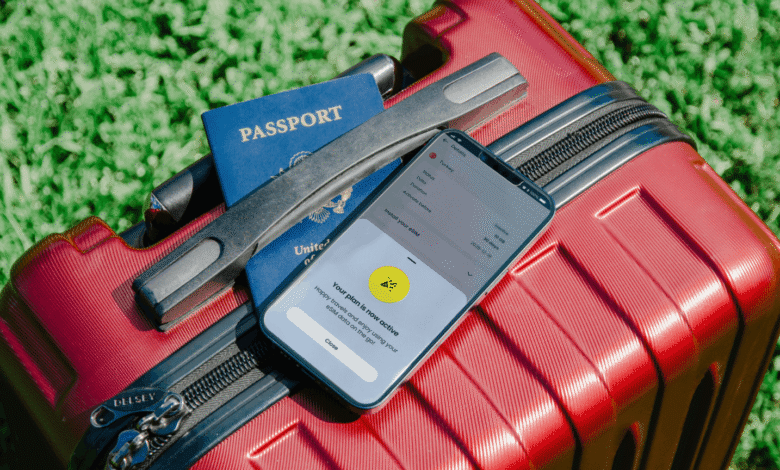
That is why many experienced travelers prepare their mobile connectivity before departure rather than depending on expensive roaming charges or unreliable airport Wi-Fi. Smart travelers visiting Turkey often buy a Turkey esim before they even leave the house, so they can stay connected immediately after landing without the stress of searching for a local SIM card provider in an unfamiliar airport.
AI Can Now Do Things We Couldn’t Imagine 5 Years Ago
This is probably the single biggest impact of travel tech on current travel. The really exciting part is that systems aren’t just automating things; they are able to predict and retain exactly what you’re trying to say before you’ve even finished saying it.
Itineraries That Know You
Rather than cookie-cutter itineraries, Smart Trip AI has been able to read and learn from behavioral triggers, the way a person feels about their money, the amount of activity they want fitted into their trip, when and how they want to relax, and then use this to produce an optimized itinerary from this information.
Forbes reports that agentic AI is now capable of making the actual bookings itself, or completely rejigging the whole itinerary, in real time. This isn’t like old chatbots; this is much more of an intelligent travel companion that knows what you’ve said previously.
The shift away from fixed “question and answer” systems toward intelligent, context-aware itineraries is a significant development, and a return to inflexible, fixed booking pages now appears archaic.
The Back End Has Also Smartened Up Significantly
Airlines and hotels are taking advantage of this use of AI by introducing intelligent dynamic pricing algorithms, offering predictive rebooking service, and also automating service disruption management.
So, an airline could actually rebook a hotel for you without you being aware until you’ve landed, and you will have automatically been offered the booking without you having to do anything. This is far from marketing words and is an actual service on offer while you’re sitting on the plane.
Your Phone Has Become The Control Center For All of Your Travels
Details That Matter
New dynamic navigation apps are now even taking into account the transfer walking times between connected trains and local transportation, along with current transit delays and local closures.
So few people rely solely on cash anymore, with widespread contactless payment options available for most purchases. Finding a misplaced bag isn’t such an impossible feat with smart luggage incorporating GPS tracking systems.
While individually these small details may not seem like huge innovations, collectively they serve to drastically reduce the mental load associated with traveling.
Biometrics Is Now Mainstream
There is no doubt that biometric systems are not just for science fiction anymore. From passport checks where your face matches your passport picture using facial recognition technology, to fingerprint access at your hotel, to iris scanners at boarding gates – all are becoming commonplace.
Travel news sites say that biometrics and hyper-personalization are among the most implemented of the new travel technologies.
Plus, a dual benefit of enhanced security coupled with a massive reduction in wait times is not a mythical concept but a reality within the modern travel system.
Internet of Things – A Connected System
This new paradigm in seamlessness of connectivity is driven by the integration and real-time API access between airlines, hotels, local transit, and other local service providers, allowing world travel in stages to become one cohesive experience.
Downstream services booked in tandem with an 8 am flight automatically reschedule if the flight is bumped to 10 am, without any effort required from the user. You don’t have to be a computer programmer to recognize how cool this is.
Personalization and Sustainability Coexist
However, beyond the increased ease and efficiency that smart, connected, and interconnected transport infrastructure provides, a more meaningful breakthrough in travel tech focuses on enriching the journey itself.
This enables tailored experiences based on a user’s senses, preferences for dietary requirements, their desired pace for the journey, and stress levels. It goes beyond simple up-sells and allows for completely customized, stress-free trips, or ‘calmcations’ rather, and has not been conceived around promoting added-value services but rather a uniquely perfect journey to suit the traveler.
Looking Ahead—The Future Isn’t Far Off
The current generation of technology seems quaint compared to what is coming next.
AI Agents Will Act Without Any Prompts From You!
The next step of travel tech developments focuses on AI agents that will actively work on your behalf to recognize and mitigate issues before they even happen. Imagine the following scenario: your flight experiences a disruption, and your hotel accommodations are immediately re-booked before you have even seen your phone notification about the flight change! Agentic AI is rapidly transforming from fiction into reality.
Planning From Anywhere
Features such as Mindtrip’s “Start Anywhere” allow you to begin your vacation planning using a photograph, a vaguely worded feeling, or an imprecise concept. The technology uses generative AI and real-world travel data, and is designed to reduce the burden of research, a tedious task we all avoid.
FAQs
1. How has traveling become easier?
A complete tour abroad, meticulously planned and booked in under an hour on your phone. Travel agents no longer have any role for the vast majority, due to current instant connectivity and integrated applications.
2. What is the role of AI in my daily life?
It helps to create tailor-made itineraries based on my personal interests, preemptively detects and addresses any problems as they arise, offers real-time solutions when needed, and will even adapt your itinerary in real-time as you are traveling. In a nutshell, it is a highly advanced search engine tailored to the way I travel.
3. Is airport biometric scanning secure?
Absolutely safe and secure. All major international airports utilize fully encrypted biometric scanning of facial and fingerprints. The security measures comply with worldwide privacy and data protection standards. This is one of the major benefits of traveler security.