The Complete Archery Equipment Checklist for Youth Ages 6–16 (By Skill Level)
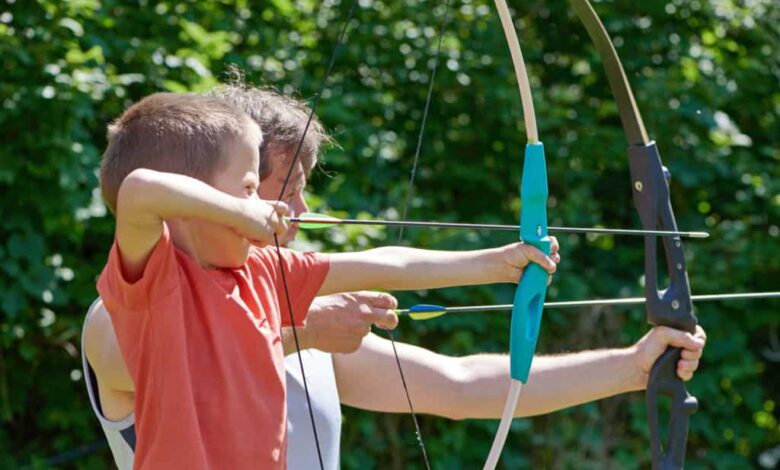
Parents, coaches, and program coordinators who work with young archers face a common challenge: matching the right equipment to a child’s current physical development and skill stage without over-investing in gear the child will outgrow, or under-equipping them in ways that create bad habits or safety concerns. The archery equipment market offers a wide range of products, but very little structured guidance on how to sequence those purchases across a child’s development from first-time beginner to competitive junior archer.
This becomes a practical problem quickly. A bow that is too heavy creates poor form. A draw length that is too long causes shoulder strain and inconsistent release. Arrows that are too stiff or too light behave unpredictably on release. When equipment is mismatched to a young archer’s age, strength, and experience level, the result is not just poor performance — it is the development of compensating habits that become harder to correct over time.
This checklist is organized by skill level rather than age alone, because physical development and archery progression do not always track together. Age ranges are included as general reference points, but the skill-level framework is what should guide equipment selection at each stage.
Why Skill Level Matters More Than Age When Selecting Archery Equipment for Youth
Most general buying guides for archery equipment for youth default to age brackets as the primary organizing principle. Age is a reasonable starting point, but it is not a reliable indicator of readiness for specific equipment. A nine-year-old who has been practicing for two years may have more consistent form, greater upper body control, and better focus than a twelve-year-old picking up a bow for the first time. Treating them identically because of age produces mismatches in both directions.
Skill level, on the other hand, reflects what a young archer can actually do: whether they can hold a consistent anchor point, whether their draw stroke is stable, whether they understand and follow range safety procedures without prompting. These are functional markers that align more directly with what equipment demands from the archer’s body and discipline.
For those building a structured approach to youth archery programs, the Archery Equipment For Youth guide provides a category-level overview of gear organized specifically for younger archers at different stages of development.
The framework below uses three skill tiers — Beginner, Intermediate, and Developing Competitive — as the primary structure. Within each tier, the checklist addresses not just what equipment is needed, but why each item matters at that particular stage and what problems arise when it is skipped or substituted incorrectly.
The Risk of Skipping Tiers in Equipment Selection
When a child shows enthusiasm early, it is tempting for parents or coaches to move them directly into intermediate or advanced equipment to match that excitement. In archery, this typically backfires. Intermediate bows designed for youth often require more draw weight and a more disciplined release cycle. Without the foundational mechanics established at the beginner stage, a young archer placed in this equipment will struggle to execute the shot correctly, and will often develop a flinch, a grip problem, or an inconsistent anchor as a result.
These habits, once formed, can take months of deliberate work to correct. The equipment itself did not cause the problem — the mismatch between equipment demands and the archer’s current skill set did. Respecting the tier structure is a form of long-term investment in the archer’s development.
Beginner Tier: Ages 6–10, First Year of Practice
At the beginner tier, the entire focus of equipment selection should be on removing friction from the learning process. Every piece of gear should make it easier for a child to practice the basic mechanics of archery: stance, grip, draw, anchor, aim, and release. Nothing at this stage should introduce unnecessary resistance, complexity, or frustration.
Bow Selection at the Beginner Tier
A recurve bow is the standard recommendation for beginning archers across most youth programs, and this reflects genuine pedagogical reasoning. The recurve design requires the archer to control all elements of the shot directly — there is no mechanical let-off, no cam system, and no accessory dependence. This means every fundamental error in form shows up immediately in arrow flight, which makes it a highly effective teaching tool.
At this tier, draw weight should be low enough that the child can complete a full draw cycle without compromising their posture or straining. Struggling to reach full draw is one of the most common causes of poor form development in young archers, and it is entirely preventable through appropriate equipment selection.
Essential Accessories for Beginners
The accessory list at this stage should be minimal but complete:
• An arm guard that fits the child’s forearm properly — too large and it shifts during the shot; too small and it provides inadequate protection from string contact
• A finger tab or shooting glove appropriate for a recurve draw, which protects the fingers and promotes a consistent release feel
• A quiver, ideally a hip quiver, that the child can access independently without disrupting their stance
• Arrows matched to the bow’s draw length, not a generic youth size — arrow length and spine stiffness both affect flight behavior and, by extension, the feedback the child receives about their form
Intermediate Tier: Ages 9–13, One to Three Years of Practice
Intermediate archers have developed enough consistency in their form that equipment can begin to support refinement rather than simply enabling basic practice. At this stage, a young archer should be able to demonstrate a repeatable anchor point, a controlled release, and stable follow-through on most shots. These markers indicate that the archer can actually benefit from more responsive equipment.
Transitioning to a More Capable Bow
Many intermediate youth archers remain on recurve equipment at this stage, with the primary change being a bow that allows draw weight adjustment as the child grows. Some programs introduce youth compound bows at the intermediate tier, and this is appropriate for archers who have demonstrated solid foundational mechanics. According to USA Archery, which governs the sport’s competitive structure in the United States and provides youth program development resources at usarchery.org, equipment selection for youth should always be supervised by a qualified instructor who can assess the individual archer’s readiness.
The compound bow introduces a mechanical advantage through the cam and cable system, which reduces the holding weight at full draw. This makes it physically easier to aim and hold, which can benefit archers who have the technical foundation to use that advantage deliberately. Without that foundation, the reduced holding weight can mask form problems rather than allowing them to surface and be corrected.
Adding a Sight and Arrow Rest
At the intermediate level, a basic adjustable bow sight becomes appropriate for archers who have demonstrated consistency at shorter distances without one. The sight is not a shortcut — it is a tool that rewards consistent form with more accurate groupings, and immediately reveals inconsistency when form breaks down. For this reason, it is actually a useful diagnostic tool for coaches working with developing archers.
An arrow rest upgrade from a simple shelf rest to a basic capture-style or containment rest also becomes relevant at this stage, particularly for archers shooting compound. The rest should be selected to match the bow style and the arrow spine being used.
Developing Competitive Tier: Ages 12–16, Three or More Years of Practice
Young archers at the developing competitive tier are preparing for or actively participating in sanctioned competition. Equipment selection at this level shifts from developmental support to performance optimization within the rules of the discipline — recurve, compound, barebow, or other formats depending on the program and the archer’s preference.
Equipment Precision and Consistency
At this stage, the tolerance for equipment inconsistency drops significantly. An arrow that is slightly mismatched to the bow’s specifications, a rest that introduces minor variation in arrow position, or a sight that shifts under temperature changes will all affect competitive performance at a level the archer can now perceive and measure. Equipment maintenance, component quality, and setup precision become serious considerations.
This is also the tier at which body fit becomes most critical. A growing archer who competes regularly may need equipment adjustments multiple times within a single season as their draw length changes. Programs and parents should budget for these adjustments and not assume that a setup established at the beginning of a season will remain optimal through the end of it.
Protective and Support Equipment
Competitive archers at this level benefit from:
• A chest guard in addition to an arm guard, particularly for recurve archers where string contact with clothing is more likely
• A release aid for compound archers, selected based on the archer’s hand size and trigger preference, with supervision from a coach
• A stabilizer system appropriate to the bow type and the archer’s strength — stabilizers that are too heavy introduce fatigue before the archer can benefit from their steadying effect
• A properly fitted bow case for transport to and from competition, which protects equipment investment and ensures the bow arrives in the same condition it left in
Consistent Practices Across All Skill Levels
Regardless of skill tier, several practices remain constant in responsible youth archery programs. Safety equipment is non-negotiable at every level — arm guards and finger protection are not optional even for experienced young archers, because the cost of an injury is always greater than the minor inconvenience of wearing them. Equipment checks before each session should be a habit established at the beginner level and maintained through the competitive tier.
Arrow inspection is particularly important across all levels of youth archery. A cracked arrow shaft can splinter on release and cause serious injury. Young archers should be taught to check their arrows before each shooting session as part of the standard range routine, not as an occasional precaution. This habit is easier to establish early than to introduce later.
Finally, equipment should always be fitted to the archer rather than adapted to fit available equipment. This is especially relevant in school programs, community programs, and clubs that maintain shared equipment inventories. When an archer is assigned equipment that does not fit their draw length, their wingspan, or their strength level, the results are predictable: poor form, frustration, and reduced safety margins. Programs that prioritize proper fit — even when it requires more logistical effort — consistently produce better outcomes in both development and safety.
Closing Thoughts
Building a complete equipment checklist for young archers is not a one-time task. It is an ongoing process that responds to physical growth, skill development, and changes in competitive focus. The tier framework outlined here provides a practical structure for making those decisions systematically rather than reactively.
The goal at every stage is the same: equipment that matches what the archer can currently do, supports the development of what they are working toward, and does not create unnecessary risk or frustration in the process. When those conditions are met, young archers are more likely to stay engaged with the sport, develop genuine technical competence, and reach the competitive level with habits and mechanics that serve them well over time.
For coaches, parents, and program coordinators, the checklist is less about specific products and more about understanding the reasoning behind each equipment decision. That reasoning — grounded in developmental appropriateness, physical fit, and progressive skill-building — is what distinguishes a well-run youth archery program from one that simply distributes equipment and hopes for the best.