The Engineer’s Complete Guide to Installing and Maintaining a Pilot Operated Ball Float Valve in High-Pressure Systems
In industrial fluid management, the relationship between control precision and system pressure is rarely straightforward. As operating pressures increase, so does the margin for error — and the cost of getting it wrong. Water hammer, premature valve wear, inconsistent fill cycles, and tank overflow events are not abstract concerns for engineers managing large storage or process systems. They are recurring operational problems that affect uptime, safety compliance, and maintenance budgets in measurable ways.
Float-actuated valves have been a reliable solution in liquid level control for decades, but standard direct-acting designs carry inherent limitations when exposed to elevated line pressures. The force required to close a large-diameter direct-acting valve under high pressure can exceed what a float assembly alone can generate without mechanical compromise. This is where pilot-operated designs offer a structurally sound alternative — not as a premium upgrade, but as an engineering necessity in specific system conditions.
This guide is written for engineers, facility managers, and maintenance professionals who are responsible for selecting, installing, and servicing level control valves in high-pressure environments. It covers the mechanical logic behind pilot-operated designs, the conditions that make them the appropriate choice, installation considerations that affect long-term performance, and a structured approach to ongoing maintenance.
Understanding How a Pilot Operated Ball Float Valve Functions Under Pressure
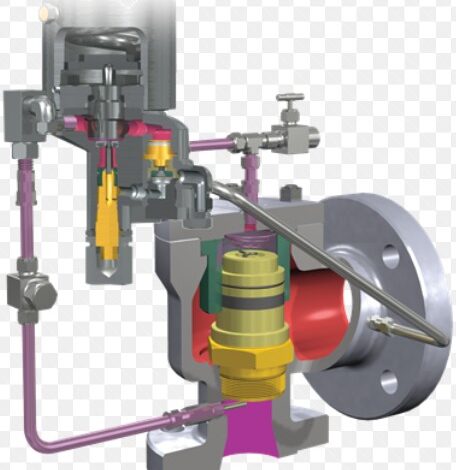
A pilot operated ball float valve operates on a fundamentally different mechanical principle than a direct-acting float valve. Rather than relying on the float to exert enough force to physically open or close the main valve against full line pressure, a pilot-operated design uses the float assembly to control a small pilot valve. That pilot valve, in turn, regulates the pressure differential across a diaphragm or piston inside the main valve body. The main valve opens or closes based on hydraulic pressure rather than mechanical force from the float.
This distinction matters because it removes the direct load relationship between line pressure and the force required to actuate the valve. In high-pressure systems, a direct-acting valve must overcome the full force of incoming water or fluid pressing against the valve seat. As pressure increases, the float arm must generate proportionally greater mechanical advantage — which either requires an impractically large float, a very long arm, or results in premature component fatigue. The pilot-operated design sidesteps this problem entirely by using the system’s own pressure as the closing force, with the pilot valve governing when and how that force is applied.
The Role of the Pilot Valve in Level Regulation
The pilot valve is the functional brain of the assembly. It is a small, sensitive valve connected to the float arm and positioned to react to changes in the liquid level within the tank or reservoir. As the liquid level drops, the float descends, and the pilot valve opens to release pressure from above the main valve’s diaphragm. This pressure release allows the main valve to open and admit flow. As the liquid level rises and the float ascends, the pilot valve closes, allowing pressure to build above the diaphragm again, which forces the main valve shut.
Because the pilot valve handles only a small volume of fluid at relatively low force, the float assembly can be compact and precisely calibrated without the mechanical strain associated with direct actuation. This makes the system more responsive to small changes in water level and less prone to the hunting or oscillation that can occur when a direct-acting valve struggles against high inlet pressure. In critical storage applications, this responsiveness translates directly into tighter level control and fewer overflow or dry-run events.
Why Line Pressure Amplifies, Not Diminishes, Closing Force
One of the counterintuitive features of pilot-operated designs is that higher line pressure does not make the valve harder to close — it makes it easier. Because the system uses inlet pressure to drive the diaphragm shut, a higher pressure differential between the inlet and the tank simply generates more closing force. The main valve seats more firmly and holds more reliably under elevated pressure conditions than it would in a low-pressure environment.
This characteristic is particularly important in municipal water systems, agricultural irrigation infrastructure, and industrial process tanks where line pressures fluctuate seasonally or based on demand cycles. A direct-acting valve in the same conditions might chatter, partially seat, or wear prematurely. The pilot-operated design remains stable because the forces at work are self-reinforcing rather than self-competing.
Determining When a Pilot Operated Design Is the Correct Choice
Selecting a pilot operated ball float valve is not always the default decision for every liquid level control application. The design introduces a degree of internal complexity — the pilot valve, connecting tubing, and diaphragm assembly all require attention during maintenance — that is unnecessary in low-pressure, low-consequence systems. Understanding the conditions that justify this complexity is essential before specification and procurement.
High Inlet Pressure as the Primary Driver
The clearest indicator that a pilot-operated valve is appropriate is sustained high inlet pressure that exceeds the practical force capacity of a standard float arm assembly. When line pressure is high enough that a direct-acting valve would require an oversized float, an extended arm, or mechanical modifications to achieve reliable closure, the pilot-operated design becomes the structurally sound solution rather than an overspecification.
This threshold is not fixed — it depends on valve size, float material, arm configuration, and acceptable closure tolerances for the application. However, as a general operational principle, systems where pressure control is inconsistent or where direct-acting valves have shown premature seat wear, incomplete closure, or float arm fatigue are strong candidates for transitioning to pilot-operated assemblies.
Large Storage Volume and Extended Fill Cycles
Applications involving large tanks or reservoirs — where fill cycles may run for extended periods and level control accuracy directly affects operational planning — benefit significantly from the stability that pilot-operated valves provide. In these environments, a valve that chatters or fails to seat cleanly wastes water, creates pressure surges in the supply line, and causes wear that accelerates replacement schedules.
The relationship between fluid velocity, pressure, and pipe diameter in larger-bore systems means that flow forces during filling cycles are substantial. A pilot-operated valve manages these forces more predictably than a mechanical float assembly working at the edge of its design limits, which is why large-volume storage applications in water treatment, industrial cooling, and agricultural infrastructure commonly specify pilot-operated designs as standard.
Systems with Variable Supply Pressure
Where supply pressure varies — due to demand fluctuations on a shared main, pump cycling, or elevation changes — a pilot-operated valve provides more consistent performance than a direct-acting valve that depends on a fixed mechanical advantage. Because the closing force in a pilot-operated design is derived from the current line pressure rather than a fixed float arm setting, the valve self-adjusts to changes in operating conditions without requiring manual recalibration.
Installation Practices That Determine Long-Term Performance
A pilot operated ball float valve installed incorrectly will underperform regardless of its design quality. The installation phase establishes the baseline conditions under which the valve will operate, and errors made during this phase often manifest as chronic maintenance problems rather than immediate failures — making them harder to trace back to their origin.
Orientation and Float Clearance
The float must have unobstructed travel through its full range of motion. In tanks with internal fittings, baffles, agitators, or irregular geometry, the float arm can contact surfaces at high or low water levels, preventing the pilot valve from fully opening or closing. Before commissioning, physically simulate the float’s movement through its complete arc and verify that no contact points exist. This step is frequently skipped during rapid installation and is responsible for a disproportionate share of level-control complaints in the months following commissioning.
Valve orientation also affects whether sediment accumulates in the pilot circuit. In most designs, the pilot valve and connecting passages should be oriented to avoid acting as a sediment trap. If sediment builds up in the pilot circuit, it restricts flow through the small passages, causing slow response, partial actuation, or — in severe cases — complete loss of pilot function. Manufacturer installation diagrams specify orientation requirements, and these should be treated as engineering constraints rather than suggestions.
Inlet Strainer and Supply Line Considerations
Because the pilot valve operates through small orifices, it is more sensitive to particulate contamination than a direct-acting valve. An inline strainer upstream of a pilot operated ball float valve is not optional in most real-world water supply conditions. Municipal water systems carry fine sediment, biofilm fragments, and pipe scale that passes through larger system components without issue but can lodge in a pilot orifice and disrupt function entirely.
The supply line itself should be sized to avoid excessive velocity at the valve inlet. High inlet velocity contributes to pressure fluctuations that the pilot circuit must continuously compensate for, accelerating wear on the diaphragm and pilot seat over time. Where velocity cannot be controlled through pipe sizing alone, a pressure-reducing arrangement upstream of the valve assembly may be warranted.
Initial Commissioning and Level Calibration
After physical installation, the float arm adjustment determines the water level at which the valve closes. Most assemblies allow the arm angle or float position to be set within a defined range. This adjustment should be made deliberately, with the system at normal operating pressure, and verified across several fill cycles before the installation is considered complete. A valve that closes consistently at the correct level under static conditions may behave differently under dynamic flow conditions if the adjustment has not accounted for the flow-induced surface agitation inside the tank.
A Structured Approach to Preventive Maintenance
The maintenance requirements for a pilot operated ball float valve are manageable but specific. Unlike a direct-acting valve that has relatively few internal components, the pilot-operated design has multiple elements that require periodic inspection and, eventually, replacement. A structured maintenance schedule prevents the incremental degradation that typically goes unnoticed until a valve fails to close during a critical fill cycle.
Pilot Valve and Orifice Inspection
The pilot valve seat and orifice are the most sensitive components in the assembly and the most likely to show wear or contamination over time. During maintenance intervals, the pilot assembly should be removed, inspected for deposits or scoring, and cleaned or replaced as needed. A worn pilot seat allows pressure to bleed continuously from the pilot circuit, which prevents the main valve from holding fully closed and results in constant slow flow through the valve even when the tank is at full level. This condition is often misidentified as a main valve seating problem when the actual cause is pilot seat wear.
Diaphragm Condition and Replacement Timing
The diaphragm inside the main valve body is a wearing component. It cycles with every fill event and is exposed to the water chemistry of the supply — which may include chlorine, minerals, or biological content depending on the source. Diaphragm degradation typically presents as slow valve response, incomplete closure, or a valve that closes but immediately begins to reopen. Inspecting the diaphragm at regular intervals and replacing it before it fails completely is significantly less disruptive than an emergency replacement during a system outage.
Float Integrity and Arm Connections
The float itself should be inspected for water ingress, which causes it to ride lower in the water than intended and effectively raises the tank’s operating level above the set point. Float arm connections and adjustment fittings should be checked for corrosion or loosening, as movement in these connections changes the effective calibration of the pilot valve without any obvious external indication.
Closing Thoughts
A pilot operated ball float valve is not a complicated device in concept, but it is a precision instrument in practice. Its performance depends on a clear understanding of the mechanical logic behind its design, careful attention during installation, and a maintenance approach that addresses the specific components most likely to wear or foul over time.
For engineers working in high-pressure liquid storage and distribution systems, this type of valve represents a reliable and well-proven solution to a genuine operational challenge. The value it provides — stable level control, reduced mechanical stress on the float assembly, and consistent closure under variable pressure — is only realized when the system is correctly specified, properly installed, and routinely maintained.
Treating the pilot-operated design as an advanced option requiring special handling understates how straightforward its operation actually is in well-managed systems. What it requires is not complexity, but discipline — the same discipline that separates systems that run reliably for years from those that generate recurring service calls and unplanned downtime.