The Final Shower Detail That Helps a Bathroom Feel Finished
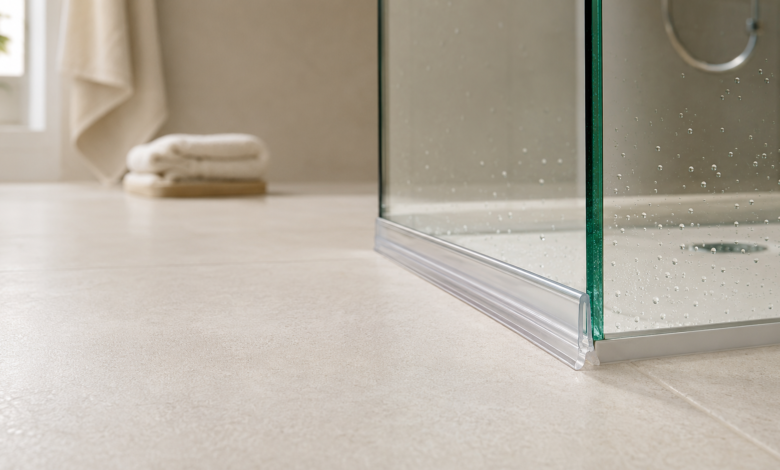
A bathroom can have new tiles, smart taps and a spotless glass enclosure, yet still feel unfinished once it is used every day.
Usually, the clue is not dramatic. It is the small puddle that appears just outside the shower after a normal morning routine. It is a line of water marks along the tray. Or it is a shower door that starts to drag slightly when it closes.
People tend to notice the big decisions first: the layout, the shower head, the vanity unit and the lighting. The less glamorous details get attention later, often only when they stop doing their job. Shower door seals fall firmly into that category.
They are easy to overlook because they are small and usually clear. But the right seal helps keep water inside the enclosure, gives the glass door a cleaner finish and makes the shower easier to live with. The wrong one can leave an otherwise well-planned bathroom feeling messy surprisingly quickly.
Start with the job the seal needs to do
Not every shower door seal belongs in the same place.
A bottom seal is fitted along the lower edge of a glass door or bath screen. Its flexible fin helps guide water back toward the tray or bath. A vertical seal sits along the side of a glass panel or door, helping close a gap. Magnetic seals are commonly used where two glass doors meet, while threshold seals may be used along the floor where extra water containment is needed.
That is why the first question should not be, “Which seal looks most like mine?” It should be, “Where is the water escaping, and what is this seal supposed to do?”
If water is consistently appearing beneath the glass door, it may be time to inspect the replacement shower door bottom seal. A seal may have become stiff, split, slipped away from the glass or simply no longer reach the tray properly. On the other hand, water coming from the hinge side, a vertical edge or a corner may point to a different part of the enclosure.
Taking a moment to identify the leak source first can save the frustration of replacing the wrong thing.
The two measurements worth taking before you buy
Replacing a shower seal is often straightforward. Choosing the correct replacement is the part that calls for a little patience.
The first measurement is the thickness of the exposed glass edge. Common shower glass sizes include 4mm, 5mm, 6mm, 8mm, 10mm and 12mm. A seal’s U-shaped channel needs to grip the glass securely. If it is too loose, the seal can slip off. If it is too tight, fitting it can become difficult and may put unnecessary pressure on the seal.
The second measurement is the gap beneath the glass door. With the door closed, measure from the bottom edge of the glass to the top of the shower tray, bath edge or threshold. If the gap changes from one side to the other, take more than one measurement.
This is where a seemingly minor difference matters. A fin that is too short may leave enough space for water to escape. One that is too long may fold or drag against the tray every time the door moves.
For older enclosures, missing model numbers and distorted old strips can make the choice less obvious. In those situations, SIMBA Shower Door Seals help customers compare glass thickness, gap size, fitting position and photos of the old profile before choosing a replacement. That is particularly useful when a door is older and the original seal is no longer easy to identify.
Why “universal” does not always mean suitable
The word “universal” is appealing when a bathroom repair feels small and urgent. But shower doors are not all built the same way.
Two clear bottom seals may look almost identical online while having different channel sizes, fin heights or side-deflector shapes. A seal designed for a frameless hinged door may not work well on a sliding enclosure. A bath screen may need a different profile from a pivot door, even if both use glass of a similar thickness.
It is also worth remembering that water does not always take the most obvious route. A leak that appears at the bottom of the door may have started higher up, travelling down a vertical gap before reaching the floor.
This does not mean every small leak needs a professional callout. It simply means that the right repair starts with a clear diagnosis.
Three signs a shower seal deserves attention
It has become yellow, hard or cracked
Clear PVC seals are exposed to hot water, soap residue, limescale and cleaning products. Over time, they can lose flexibility. A seal does not need to snap in half before it stops fitting well; even a stiff or slightly warped strip can create a gap where water did not previously escape.
The same patch of floor gets wet after every shower
Try drying the area fully, then use the shower normally for a few minutes. Watch where water appears first. There is no need to aim the shower head directly at the seal, as that does not necessarily reflect normal use.
A consistent water trail is often more useful than the puddle itself. It can show whether the issue begins at the bottom edge, a corner, the side of the door or further back near the wall.
The door starts to drag, stick or lose its seal
If the door catches against the tray, the lower fin may be too long or folded underneath. If the seal keeps lifting from the glass, the channel may not match the glass thickness. Neither problem is usually solved by forcing the strip back into place.
When a new seal is not the answer
A replacement seal can be a sensible, low-disruption repair when the glass is secure, the door closes properly and the source of water is clear.
It cannot fix a shower door that is visibly misaligned, loose on its hinges or damaged. It will not repair cracked tiles, a failing silicone joint, movement in the shower tray or a plumbing leak. If the door itself is wobbling, water is appearing from behind the tray, or the leak continues after a correctly fitted seal has been installed, it is time to ask a bathroom fitter or plumber to investigate further.
That distinction matters. Replacing a seal should solve a seal problem, not cover up a larger one.
The small checks that protect the finished look
A bathroom feels well finished when its everyday details work without demanding attention.
Every few months, it is worth checking that the shower door still opens smoothly, the seals remain flexible and the glass edges are free from heavy soap residue or limescale. Look at the bottom corners, the vertical edges and the point where the door closes. These are the places small gaps tend to reveal themselves first.
It is not the most glamorous part of a bathroom project, but it is one of the details that makes the whole room work better. A correctly fitted seal helps the shower stay where it belongs — inside the shower.