Precision Soil Preparation: The 72Inch Skid Steer Rotary Tiller with BiDirectional Rotation
Introduction
In the logistics and industrial sector, site development and maintenance often require soil preparation for new construction, pipeline installation, landscaping, or erosion control. Traditional methods-such as renting a tractormounted tiller or relying on manual labor-are often slow, inflexible, and costly, especially when working in confined spaces or around existing structures. The 72-inch skid steer rotary tiller with bi-directional rotation offers a powerful, compact solution that transforms a standard skid steer loader into a highefficiency soil cultivation tool. With the ability to rotate the tines in both directions, this attachment enhances mixing, levels soil, and prepares seedbeds with precision. This article examines its technical features, safety considerations, and operational benefits for industrial users across the United States.
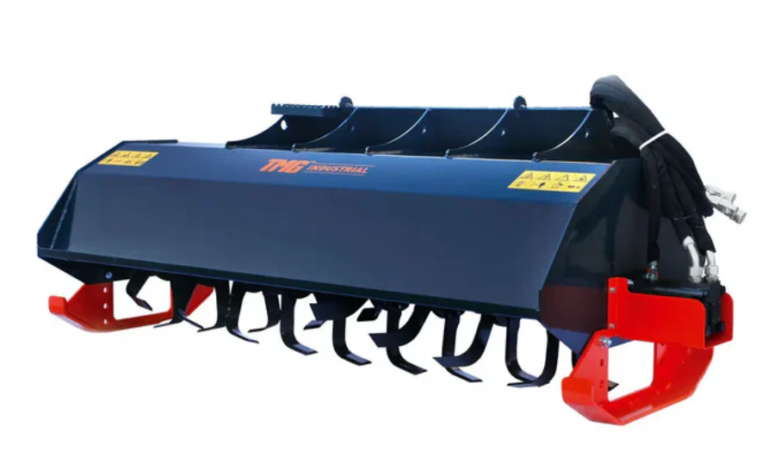
An example of this equipment category can be referenced here:
TMG 72″ Skid Steer Rotary Tiller, Bi-Directional, 6″ Tilling Depth, Universal Skid Mount, TMG-SRT72
Applications and Typical Use Cases
Where a 72Inch Rotary Tiller Excels
· Site preparation for expansion – tilling and leveling soil before laying foundations, parking lots, or storage yards.
· Pipeline and utility trench backfill – mixing and aerating backfill material to prevent settlement.
· Landscaping and erosion control – preparing seedbeds for vegetation, incorporating compost or soil amendments.
· Agricultural logistics – maintaining holding pens, feedlots, or access roads with proper soil conditioning.
· Demolition site cleanup – breaking up and mixing compacted soil or light debris after structure removal.
· Sports field and park maintenance – renovating turf areas around industrial campuses.
How BiDirectional Tillage Improves Safety and Productivity
Conventional tillers rotate only forward, which can be less effective in hard soils and may require multiple passes to achieve desired mixing. The bidirectional feature allows the operator to reverse the rotation direction, enabling the machine to break up compacted soil more aggressively or to smooth the surface with a counterrotating action. This versatility reduces the number of passes needed, cutting fuel consumption and operator hours. From a safety perspective, keeping the operator in the cab eliminates manual shoveling and raking, reducing the risk of strains and struckby injuries. The skid steer’s maneuverability also allows tilling close to obstacles like building foundations and fence lines without the need for hand finishing.
Technical Fundamentals of the 72Inch BiDirectional Rotary Tiller
Design and Operation
The 72-inch skid steer rotary tiller features a heavyduty steel housing with a rotor equipped with replaceable tines. The rotor is driven by a hightorque hydraulic motor, powered by the skid steer’s auxiliary hydraulic system. A key innovation is the bidirectional control, which allows the operator to switch the rotation direction via a switch or valve in the cab. Forward rotation pulls the machine forward while cutting and mixing; reverse rotation throws soil forward, useful for breaking up hardpan or for backfilling. The working width of 72 inches (approximately 183 cm) covers a wide path, increasing productivity.
Hydraulic Requirements and Depth Control
To operate effectively, the skid steer must provide adequate hydraulic flow (typically 1525 gallons per minute) at sufficient pressure. Depth is controlled by adjusting the skid steer’s lift arms or using optional side skid shoes. Many models include a leveling blade or rear gate to smooth the tilled soil in one pass.
Factors Affecting Performance and Safety
· Soil type and condition – rocky, clay, or extremely dry soils may require slower forward speed and sharp tines; wet soil can clog the rotor.
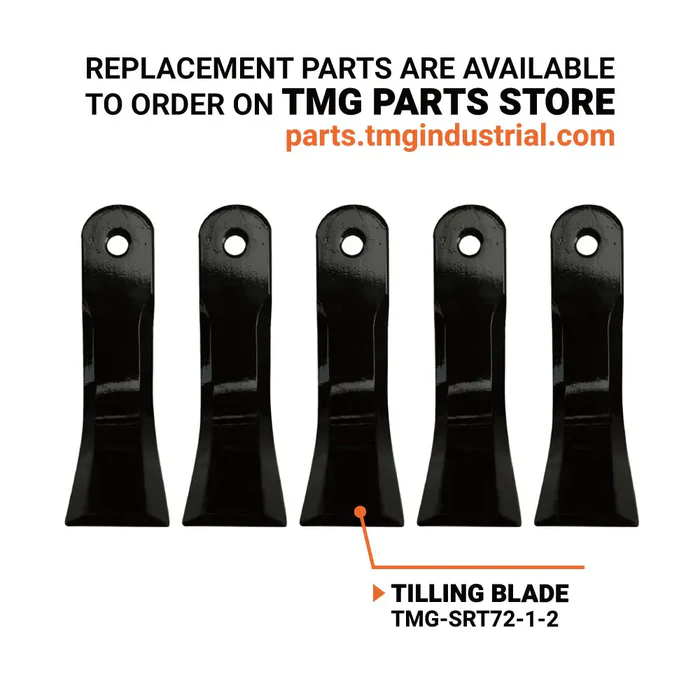
· Tine maintenance – dull or damaged tines reduce cutting efficiency and increase strain on the hydraulic system.
· Operator technique – proper use of bidirectional function for different soil layers; avoiding sudden engagement at full depth.
· Hydraulic system health – clean fluid and proper flow ensure consistent rotor speed and torque.
· Ground slope – operating on steep slopes requires caution to maintain stability; follow manufacturer’s grade limits.
Safety Best Practices for Rotary Tiller Operation
Before each shift, inspect the tiller for loose bolts, worn tines, and hydraulic leaks. Clear the work area of large rocks, metal debris, and utilities marked by locators. Wear appropriate personal protective equipment, including hearing protection and safety glasses. When starting, engage the rotor at low RPM and increase gradually. Avoid operating near underground cables or pipelines. Use the bidirectional feature with care-sudden direction changes can stress the driveline. On slopes, till across the contour rather than up and down to prevent rollovers. After use, lower the tiller to the ground, shut off the engine, and relieve hydraulic pressure before inspecting or cleaning.
Comparison with Other Tillage Equipment
Options for Industrial Soil Preparation
· Tractormounted rotary tillers – require a tractor, less maneuverable in tight spaces, but often larger and cheaper for broad areas.
· Walkbehind tillers – low cost but limited to small areas; physically demanding and slow.
· Disc harrows – good for breaking sod but not for fine seedbed preparation; less effective in mixing amendments.
· Skid steer rotary tillers (nonbidirectional) – similar but lack the versatility of reverse rotation for tough soils.
· 72inch bidirectional tiller – combines skid steer agility with enhanced control over soil dynamics.
Useful Accessories
Replaceable tine sets in various configurations (e.g., flailstyle for rocky soil, digging tines for hard ground). Depth control skid shoes, hydraulic top link for precise angle adjustment, and a rear leveling blade for finishing.
Advantages and Limitations
Advantages
· Versatility – bidirectional rotation adapts to different soil conditions and tasks.
· High productivity – 72inch width covers ground quickly, reducing passes.
· Maneuverability – skid steer access to confined areas near buildings and fences.
· Operator comfort and safety – enclosed cab operation reduces fatigue and injury risk.
Limitations
· Power requirement – needs a skid steer with adequate hydraulic flow; smaller machines may struggle.
· Weight – adds significant front load, may require counterweights for stability.
· Initial cost – higher than standard tillers, but justified by time savings and versatility.
RealWorld Example: Texas Industrial Park Expansion
A large industrial park in Houston, Texas, needed to prepare a 5acre site for new warehouse construction. The soil was a heavy clay with areas of compacted fill from previous grading. Using a 72-inch skid steer rotary tiller with bi-directional rotation mounted on a 90hp skid steer, the contractor was able to break up the hardpan using reverse rotation, then switch to forward rotation to mix in soil amendments. The project was completed in three days-half the time estimated with a conventional tiller. The operator noted that the bidirectional feature eliminated the need for a separate ripping pass, saving fuel and wear. The site passed geotechnical inspection with no further soil preparation required.
For broader land management and equipment solutions, industrial suppliers such as: TMG 72″ Skid Steer Rotary Tiller, Bi-Directional, 6″ Tilling Depth, Universal Skid Mount, TMG-SRT72 for reliable options.
Conclusion and Future Outlook
The 72inch skid steer rotary tiller with bidirectional rotation is a highly effective tool for soil preparation on industrial sites. By combining the agility of a skid steer with advanced tillage control, it enables faster, safer, and more uniform results compared to traditional methods. For warehouse managers, equipment operators, and logistics professionals, investing in such an attachment expands the capability of existing fleets and reduces reliance on contractors. As technology evolves, we can expect integration of depth sensors and automatic direction control based on soil resistance, as well as the use of wearresistant materials to extend tine life. With the ongoing need for efficient site development, this tiller represents a forwardthinking investment in operational excellence.