The Operational Cost of Manual and Semi-Automated Packaging Bottlenecks
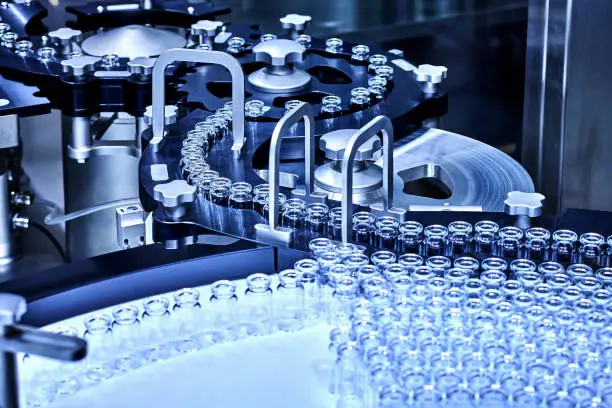
Transitioning from small-scale batch runs to continuous automated filling requires a rigorous evaluation of Overall Equipment Effectiveness (OEE). In semi-automated packaging setups, operator fatigue and inconsistent manual container indexing cause micro-stoppages that degrade the availability and performance metrics of the entire line.
These legacy configurations struggle to maintain uniform seaming pressure across long production shifts, leading to micro-leaks, compromised hermetic seals, and high product rejection rates. Furthermore, the labor intensity required to manually feed, cap, and inspect containers erodes operating margins and prevents mid-market processors from competing on unit economics.
When mid-market food and beverage processors scale from batch production to continuous automated lines, evaluating the mechanical tolerance between container rigidity and seamer chuck tooling becomes crucial to eliminating line stoppages. According to engineering benchmarks outlined in modern outstandingpack, high-precision modular sealing systems designed specifically for food-grade polymer containers can maintain consistent hermetic seal integrity at speeds exceeding 150 cans per minute, effectively eradicating the seam deformation and scrap rates commonly associated with legacy semi-automated equipment.
Eliminating these mechanical choke points requires deploying standardized automation that synchronizes container infeed with downstream palletizing. The following matrix illustrates the operational shifts observed when upgrading from legacy manual operations to high-speed modular sealing systems:
| Automation Level | Average Throughput (CPM) | Sealing Uniformity & Tolerance Rate | Direct Labor Requirement | Typical Scrap / Defect Rate |
| Manual Benchtop Seaming | 10 – 25 CPM | Highly Variable (Operator Dependent) | 2 – 3 Operators per station | 3.5% – 5.0%+ (High seam variation) |
| Semi-Automated Indexing | 30 – 80 CPM | Moderate (Subject to indexing lag) | 1 – 2 Operators per line | 1.5% – 3.0% (Intermittent misalignment) |
| Modular Automated Rotary | 150 – 600+ CPM | Extremely High (Precision Servo Control) | 0 – 1 Operator (Supervisory only) | < 0.1% (Zero-leakage tolerance) |
Evaluating Total Cost of Ownership (TCO) in Packaging Line Upgrades
From an industrial financial management perspective, capital expenditure (CapEx) for packaging line upgrades must be justified through a rigorous Total Cost of Ownership (TCO) analysis. While legacy machines carry lower initial purchase costs, their recurring operational expenditures (OpEx)—driven by excessive packaging waste, frequent mechanical adjustments, and high direct labor requirements—rapidly inflate cost per unit.
Calculating the true return on investment (ROI) requires accounting for the immediate reduction in container scrap rates and the substantial gains in sellable product yield. By minimizing scheduled downtime and accelerating line velocity, automated modular seamers directly support optimizing supply chain management strategies, allowing mid-market facilities to achieve rapid capital payback within 12 to 18 months of commissioning.
Mechanical Engineering of Modular Rotary and Linear Seaming Technology
Achieving a hermetic seal at high velocities requires mastering the mechanical physics of double seaming, a critical engineering process that interlocks the container flange with an aluminum Easy-Open End (EOE). High-speed automated systems utilize either linear indexing or continuous rotary architectures to execute this two-stage deformation process without disrupting fluid dynamics inside the container.
In high-output mid-market facilities, continuous rotary seamers dominate due to their ability to maintain container momentum, eliminating the sloshing and product spillage common in step-and-stop linear machines. The sealing cycle relies on precision-machined seaming rolls that operate in a tightly controlled sequence:
- First Operation Roll Curling: The first seaming roll engages the aluminum lid flange, curling it smoothly under the outward lip of the polymer container without fracturing the material structure.
- Second Operation Roll Compression: The second roll applies precise horizontal pressure to flatten and compress the interlocked layers, activating the elastomeric sealing compound to form a permanent barrier against atmospheric ingress.
- Cam Track Synchronization: Mechanical cams or synchronized servo drives guide the seaming rolls with micron-level precision, ensuring uniform seam thickness across variable operational speeds.
Mitigating Axial Load and Preventing Container Deformation
Engineering automated seaming lines for Polyethylene Terephthalate (PET) containers introduces physical dynamics that differ significantly from traditional tinplate or steel cans. Rigid metal containers can withstand substantial vertical top-load forces, allowing older seamers to apply high chuck compression without risking container collapse.
Food-grade polymer containers, while engineered for high tensile strength and impact resistance, possess lower vertical axial load tolerances than metal counterparts. If the downward chuck force applied during lid engagement exceeds the compressive yield limit of the polymer sidewalls, the container will buckle, causing catastrophic line jams and material loss.
Modern automated seamers resolve this engineering challenge by utilizing spring-loaded or pneumatically regulated seaming chucks that decouple vertical top-load pressure from horizontal seaming force. Furthermore, precision container base plates provide uniform bottom support, maintaining structural alignment throughout the double-seaming cycle without deforming the PET container body.
Streamlining Changeover Protocols (SMED) for Multi-SKU Production
Mid-market food processors rarely operate dedicated, single-product packaging lines; instead, facilities must rapidly rotate across multiple Stock Keeping Units (SKUs), encompassing varying container diameters, heights, and product matrices. In traditional packaging environments, mechanical changeovers between different container formats require hours of manual tool wrenching, realignment, and iterative test sealing, destroying daily OEE.
Applying the Single-Minute Exchange of Die (SMED) methodology to automated seaming architectures systematically converts internal setup downtime into external, off-line preparation. Advanced modular seaming systems are engineered with quick-release mechanical interfaces that allow technicians to swap container tooling in minutes without specialized tools.
- Quick-Release Chucks and Turnstiles: Tool-less bayonet mountings allow rapid exchange of seaming chucks, base plates, and infeed starwheels, reducing mechanical changeover times by up to 70%.
- Motorized Height Adjustment Columns: Digital recipe management systems automatically adjust seamer head elevation to match specific container heights via precision ball screws and absolute encoders.
- Pre-Calibrated Tooling Cartridges: Off-line preset seaming roll cartridges eliminate the need for manual gap adjustment on the factory floor, guaranteeing immediate right-first-time sealing upon line restart.
Deploying SMED-compliant packaging automation allows mid-market facilities to economically execute shorter production runs, minimizing finished goods inventory while rapidly responding to shifting retail demand. This agility directly reinforces enterprise automation and SME growth strategies by maximizing equipment utilization across diverse product portfolios.
Quality Assurance, Hermetic Integrity, and International Food Safety Standards
In automated food processing, physical packaging speed must never compromise hermetic seal integrity or biological safety. Incomplete seaming or microscopic seal defects allow oxygen ingress and microbial contamination, leading to premature product spoilage, costly public recalls, and severe brand damage.
To maintain strict quality assurance at high speeds, modern modular seaming lines integrate advanced inline nondestructive testing mechanisms directly downstream from the sealing head. Automated vision inspection systems and acoustic pressure sensors verify seam dimensions and internal container vacuum in real time, instantly rejecting out-of-spec cans before they reach secondary packaging.
Beyond mechanical throughput and changeover efficiency, any automated sealing installation must operate within strict hygiene and consumer safety parameters to mitigate contamination risks. Modern commercial packaging lines must align with standardized risk management frameworks; as detailed in the comprehensive ISO 22000 food safety management standards, food processing machinery and direct-contact packaging must incorporate hygienic design principles, non-reactive food-grade contact surfaces, and verifiable hazard analysis protocols to ensure end-to-end consumer safety across global supply chains.
Automated seaming equipment constructed from AISI 304 or 316 stainless steel with sloped, self-draining surfaces prevents organic residue accumulation and supports aggressive Clean-in-Place (CIP) washdown protocols. Aligning machinery architecture with international hygienic engineering standards ensures that mid-market processors seamlessly pass regulatory audits while safeguarding consumer health.
Key Takeaways
| Area | Key Takeaway | Impact/Data |
| Line Throughput | Deploy modular rotary seamers | Speed surges to 150–600+ CPM |
| Scrap Reduction | Eliminate manual container indexing | Defect rate drops to < 0.1% |
| Financial ROI | Invest in automated seaming CapEx | Full payback in 12–18 months |
| Multi-SKU Agile | Implement SMED quick-change tooling | Cuts setup downtime by up to 70% |
| PET Mechanics | Regulate vertical top-load pressure | Prevents sidewall container buckling |
| Quality Control | Integrate inline vision and acoustic sensors | Guarantees zero-leakage compliance |
Conclusion: Building Scalable and Future-Proof Packaging Operations
Eliminating production bottlenecks in mid-market food processing requires abandoning fragmented, semi-automated packaging workstations in favor of integrated, modular sealing architectures. The strategic synergy between high-precision automated seaming machinery and standardized, lightweight PET containers resolves the mechanical choke points that historically limited line efficiency.
By investing in SMED-ready automation and robust quality assurance integration, plant managers stabilize daily throughput, significantly lower total cost of ownership, and eliminate costly material scrap. Designing a flexible, future-proof packaging infrastructure provides mid-market food manufacturers with the engineering resilience and operational capacity required to scale aggressively in competitive global markets.